Español
 Francés
 Русский
 Indonesia
 العربية
 Português
 Deutsch
 ไทย
ไทย
 Pilipino


Application of Geomembrane in Guinea
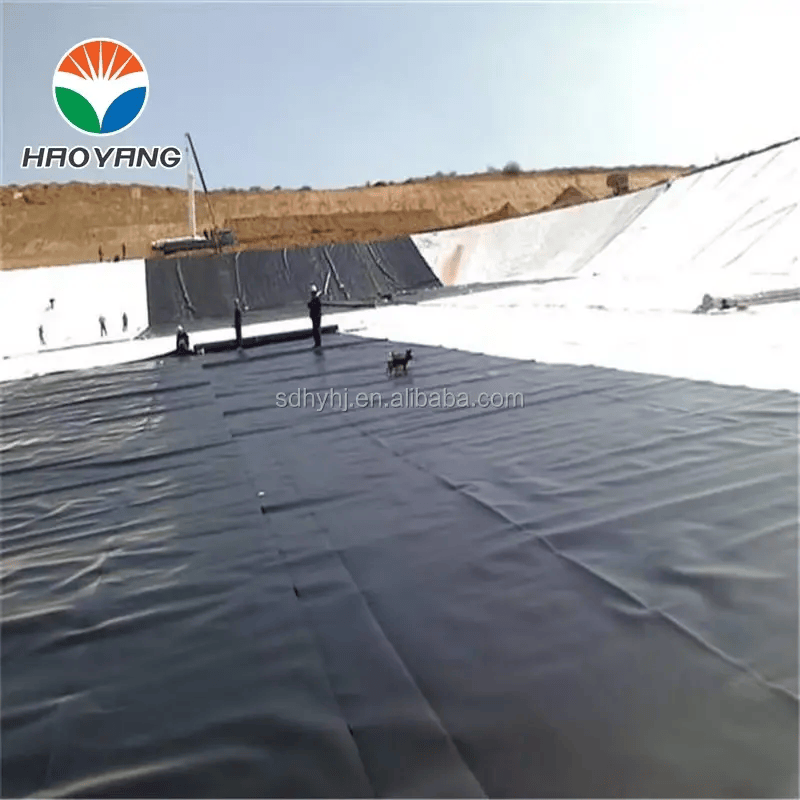
1.Ultra-low permeability blocks bauxite leachate seepage, protecting local groundwater and complying with Guinea’s mining environmental rules.
2.Strong acid & alkali resistance withstands mine wastewater and tropical soil corrosives, fitting local alumina mining tailing ponds.
3.Carbon black formula delivers outstanding UV resistance, stable under Guinea’s year-round high temperature and strong sunlight without aging.
4.High tensile and puncture strength resists rough terrain, ore stacking and heavy construction machinery on coastal mining sites.
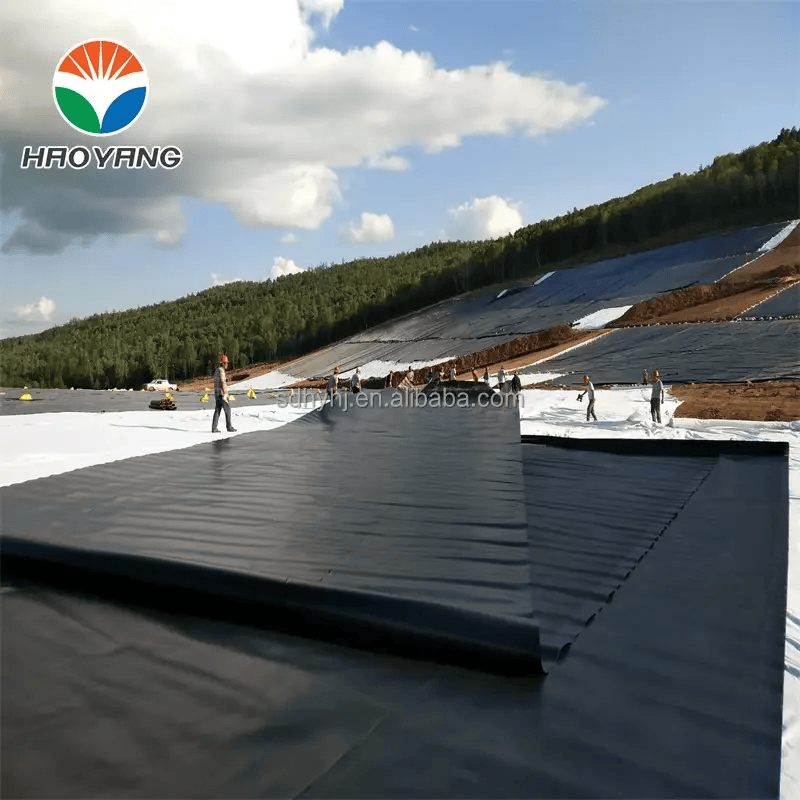
5.Large rolls enable fast thermal welding installation, cutting construction cycles and lowering long-term maintenance costs for remote mines.
Chapter 1 Introduction to Geomembrane Composition
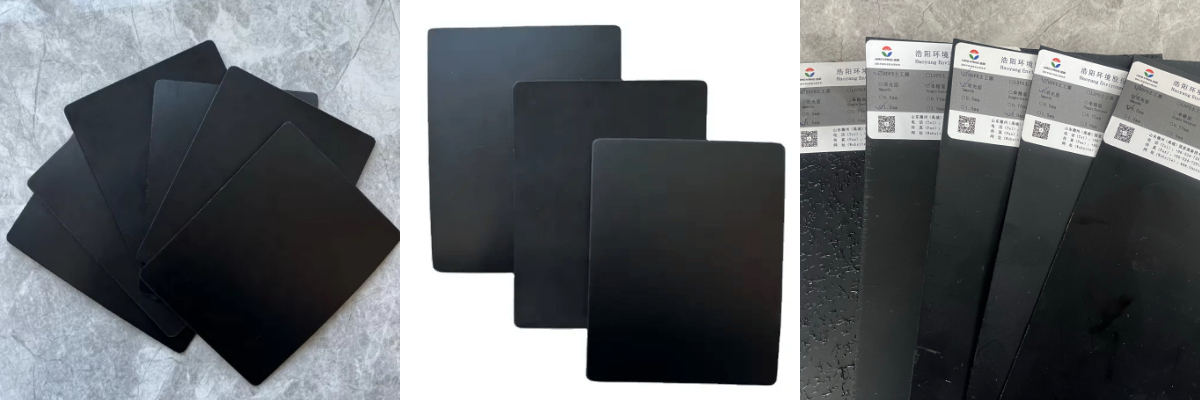
HDPE geomembrane is the mainstream impermeable geosynthetic material widely used in Guinea’s mining and infrastructure projects. Its main raw material is virgin high-density polyethylene resin accounting for 97%–98% of total weight, with 2%–3% carbon black evenly mixed as UV stabilizer to resist strong tropical sunlight. Trace antioxidants and thermal stabilizers are added to prevent oxidative aging under high temperature. The semi-crystalline polymer structure delivers ultra-low permeability, stable chemical inrtness and flexible mechanical performance. Extrusion forming produces integral seamless rolls, suitable for harsh tropical, acid-base mining environments across Guinea’s coastal and inland mining zones.
Chapter 2 Geomembrane Classification, Thickness & Complete Specification
Geomembranes applied in Guinea are divided into HDPE smooth geomembrane, HDPE textured geomembrane and LLDPE geomembrane by raw material and surface shape. HDPE series dominates mining projects for superior puncture and chemical resistance; textured types are specially used for mine slopes to increase friction and anti-slip performance. LLDPE geomembrane is adopted for agricultural reservoirs and aquaculture ponds with low mechanical load. Standard thickness ranges from 0.5mm to 3.0mm, and mining projects in Boké and Simandou uniformly select 2.0mm–2.5mm thick geomembrane.
Product Type | Surface Feature | Standard Thickness (mm) | Main Application Scenarios in Guinea | Standard Roll Width |
| Smooth HDPE Geomembrane | Flat two sides | 0.25 / 0.5 / 0.75 / 1.0 / 1.5 / 2.0 / 2.5 | Bauxite tailings pond, ore washing pool, evaporation tank | 4m / 6m / 8m/10m |
| Textured HDPE Geomembrane | Single/double rough surface | 0.25 / 0.5 / 0.75 / 1.0 / 1.5 / 2.0 / 2.5 | Mine slope lining, heap leach pad side wall | 4m / 6m/8m/10m |
| LLDPE Geomembrane | Soft smooth surface | 0.25 / 0.5 / 0.75 / 1.0 / 1.5 / 2.0 / 2.5 | Agricultural irrigation reservoir, fish pond, rural sewage lagoon | 4m / 6m/8m/10m |
Chapter 3 Physical & Chemical Performance Index
All geomembranes supplied to Guinea’s mining projects comply with international GRI GM13 and ASTM testing standards. The table below lists core physical and chemical indicators for 2.0mm HDPE geomembrane.
Test Item | Unit | Standard Index | Property Category |
Density | g/cm³ | ≥0.940 | Physical |
Carbon Black Content | % | 2.0–3.0 | Chemical/Anti-UV |
Yield Tensile Strength | kN/m | ≥26 | Physical-Mechanical |
Break Elongation | % | ≥700 | Physical-Mechanical |
Tear Resistance | N | ≥249 | Physical-Mechanical |
Puncture Resistance | N | ≥640 | Physical-Mechanical |
Standard OIT (Oxidation Induction Time) | min | ≥100 | Chemical Anti-Aging |
Cold Crack Resistance | ℃ | -70 No crack | Physical Low-Temp |
Water Vapor Permeability | g·cm/(cm²·s·Pa) | ≤1.0×10⁻¹³ | Hydraulic Physical |
Dimensional Thermal Stability | % | ±2 | Physical Thermal |
Stress Crack Resistance | h | ≥300 | Chemical Durability |
Acid & Alkali Resistance | pH Range | 1.5–14 No corrosion | Chemical Corrosion |
Carbon Black Dispersion | Grade | Grade 1–2 | Chemical UV Stabilization |
Chapter 4 Main Application Fields of Geomembrane in Guinea
1. Bauxite Mining Tailings Storage: Guinea owns one-third of global bauxite reserves in Boké and Boffa regions. HDPE geomembrane lines tailings ponds to block alkaline leachate from polluting coastal groundwater and mangrove wetlands, complying with local environmental mining regulations.
2. Simandou Iron Ore Processing System: Used for ore washing pools, heap leach pads and wastewater evaporation ponds, resisting acidic iron tailings and rough ore punctures.
3. Agricultural Water Storage & Irrigation: LLDPE geomembrane lines rural reservoirs and irrigation canals across middle Guinea’s savanna, reducing water seepage amid long dry seasons to stabilize rice and fruit planting.
4. Municipal & Industrial Waste Treatment: Applied in Conakry’s landfill liner and industrial sewage lagoons, isolating domestic and factory toxic waste to protect coastal river systems.
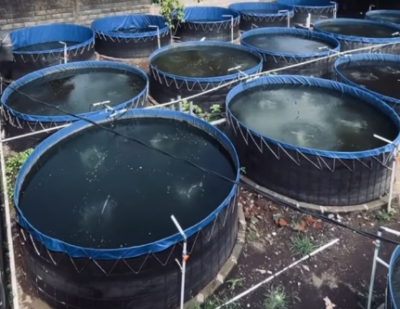
5. Aquaculture Construction: Thin geomembrane lines fish and shrimp ponds in coastal Boké and Boffa, avoiding saline soil seepage and improving aquaculture yield. The five sectors cover over 90% of geomembrane demand in Guinea, with mining projects accounting for more than 70% of total market volume due to booming bauxite and iron ore exploitation.
Chapter 5 Deep Application of Geomembrane in Bauxite Mines & Simandou Iron Ore
Bauxite Mines:
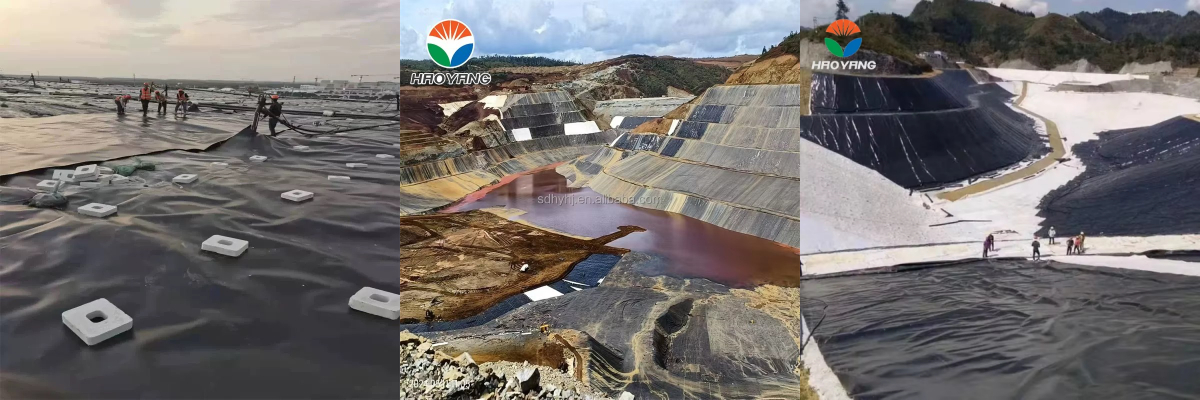
Guinea’s mineral industry is the core consumption scenario of geomembrane, especially bauxite mines in Boké, CBG Sangarédi, SMB Winning Consortium and Simandou super-large iron ore project. For bauxite mines, mining produces massive alkaline tailings with high alumina residue. 2.0–2.5mm double-sided textured HDPE geomembrane forms composite anti-seepage systems with geotextile at tailings pond bottoms and slopes. It prevents alkaline seepage from infiltrating coastal freshwater and mangrove ecosystems, solving the biggest environmental pain point of local bauxite export mines. The membrane’s high UV stability adapts year-round high temperature and strong sunshine without rapid aging for long-term open-air service.
Simandou Iron Ore:
For Simandou iron ore, mining wastewater contains acidic heavy metal ions and sharp iron ore fragments. Thickened HDPE geomembrane with high puncture resistance is laid on ore washing tanks, temporary ore pile interception zones and tailings storage facilities. It blocks iron ion leakage into local river basins, meeting strict environmental assessment standards required by the Simandou project’s Chinese and international investors. Thermal welding construction adapts remote mountain construction conditions, cutting project cycle and long-term maintenance cost. At present, all large-scale bauxite and Simandou branch mines have taken geomembrane liner as mandatory environmental standard facility before production.
Chapter 6 Future Development Trend & Core Function of Geomembrane in Guinea’s Bauxite & Simandou Iron Ore Industry
Guinea’s government is continuously upgrading mining environmental protection laws, forcing all bauxite and iron ore projects to build standardized anti-seepage containment systems, which will drive sustained geomembrane market growth in the next decade. The industry trend will shift from thin low-standard membranes to mining-grade thick HDPE textured geomembrane, with composite geomembrane integrated with drainage geotextile becoming mainstream engineering solution.
For bauxite and Simandou iron ore projects, geomembrane acts as an irreplaceable ecological barrier. It fundamentally cuts heavy metal and acid-base tailings leakage,