Español
 Francés
 Русский
 Indonesia
 العربية
 Português
 Deutsch
 ไทย
ไทย
 Pilipino


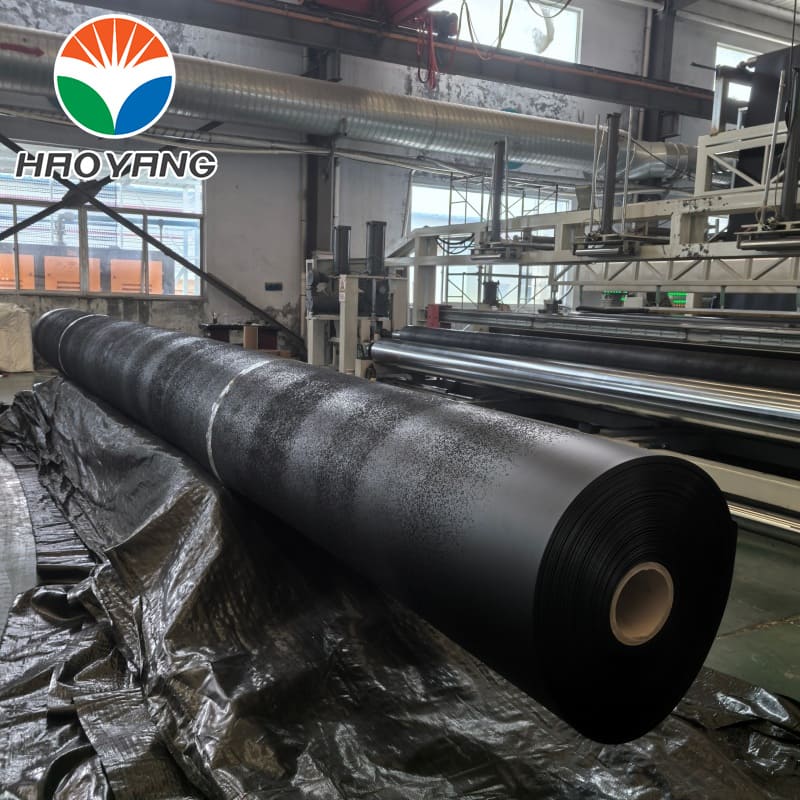
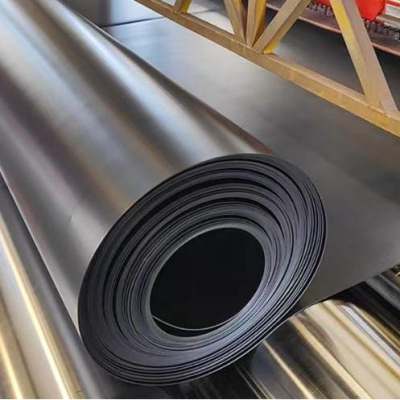
1.5mm Textured Geomembrane
1. 1.5mm textured geomembrane provides enhanced friction, improving slope stability and preventing slippage in landfill caps, mining heaps, and steep embankments.
2. The textured surface combined with HDPE material ensures excellent impermeability and chemical resistance, ideal for demanding containment applications.
3. With strong mechanical properties, it offers high tensile strength and puncture resistance, suitable for heavy-load and harsh site conditions.
4. Designed for long-term outdoor use, it delivers superior UV stability and durability, reducing maintenance and extending service life.
1.5mm Textured Geomembrane: Performance, Applications, and Engineering Value Guide
Most containment engineers will tell you a common truth: many liner failures have nothing to do with leakage. Instead, they stem from subtle liner slipping and slope instability that slowly compromises the entire containment system. This is exactly why the 1.5mm textured geomembrane has become a go-to upgrade for high-demand civil and environmental projects. It retains the classic waterproof barrier performance of standard HDPE liners while adding enhanced surface friction, solving the hidden stability flaws that plague smooth geomembranes. In this guide, we break down its core performance, practical use cases, key installation tips, and long-term engineering value for modern slope and industrial containment projects.
I. Understanding 1.5mm Textured Geomembrane
Before diving into performance and use cases, let’s clarify what sets this specialized liner apart from ordinary geomembrane options on the market.
1. What Is a 1.5mm Textured Geomembrane
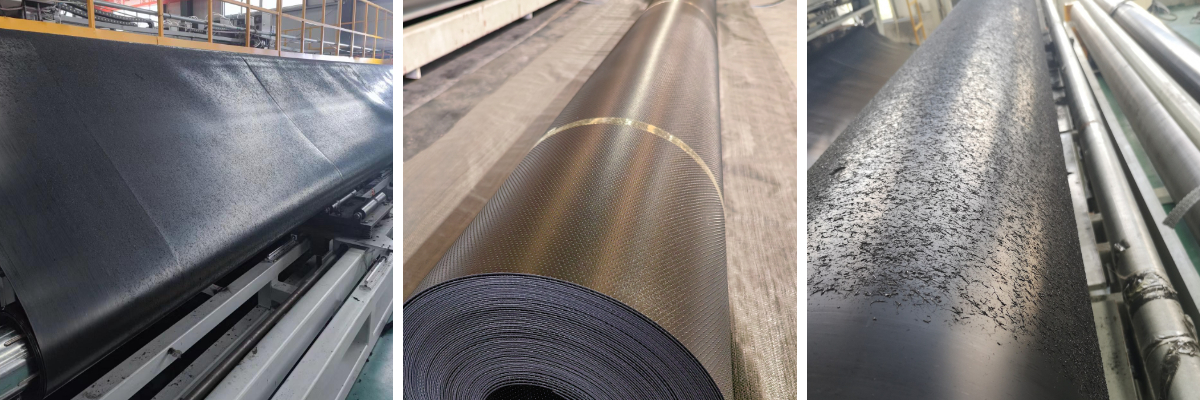
A 1.5mm textured geomembrane is a premium HDPE impermeable liner with a standardized nominal thickness of 1.5mm, featuring a customized roughened texture on one or both surfaces. Unlike flat, smooth geomembranes designed purely for anti-seepage purposes, its textured surface is engineered specifically to boost interface friction. This simple yet effective design eliminates sliding risks, making it ideal for sloped terrain and multi-layer containment systems where standard liners often underperform.
2. Smooth vs Textured Geomembrane Core Differences
The biggest distinction between smooth and textured geomembranes lies in on-site adaptability, especially for non-flat project terrain. The table below clearly outlines their practical differences for engineering reference:
Type | Surface Feature | Friction Performance | Typical Application |
Flat, uniform surface | Low friction coefficient | Flat pond bottoms, horizontal reservoirs | |
Single-sided Textured | One rough textured side | Medium-high friction | Moderate slope landfill and water projects |
Double-sided Textured | Roughened on both sides | Maximum friction strength | Steep slopes, mining heap leach pads |
It’s easy to see why textured geomembranes dominate slope-centric projects. Their structural design directly targets the stability weaknesses of traditional smooth liners.
II. Key Performance Characteristics
The 1.5mm textured geomembrane doesn’t sacrifice basic barrier performance for friction. It delivers well-rounded mechanical durability, chemical stability, and weather resistance, fully meeting GRI GM13 international industry standards.
1. Friction and Interface Shear Strength Advantages
Enhanced friction is the signature advantage of this liner, addressing the most common pain point in sloped containment construction:
The professional textured surface effectively increases the interface friction angle between the liner and soil or geotextile layers
Greatly reduces lateral sliding and displacement risks between multi-layer liner systems
Maintains stable structural performance under long-term water pressure and external load
This unique strength makes it indispensable for landfill caps, heap leach pads, and steep slope retention systems.
2. Standard Mechanical Properties
Even with surface texturing, the liner retains excellent tensile toughness and puncture resistance, with verified parameters as follows:
Performance Property | Standard Value |
Nominal Thickness | 1.5 mm |
Tensile Strength at Yield | ≥ 15 kN/m |
Tensile Strength at Break | ≥ 27 kN/m |
Elongation at Break | ≥ 700% |
Puncture Resistance | ≥ 480 N |
3. Chemical and UV Aging Resistance
Built for harsh outdoor and industrial environments, this textured geomembrane offers reliable long-term stability. It resists daily exposure to acids, alkalis, and landfill leachate, avoiding corrosion and structural degradation. With a controlled 2.0–3.0% carbon black content, it delivers outstanding UV resistance, preventing brittleness and performance loss under long-term sunlight exposure.
III. Application Scenarios and Engineering Challenges
Every design feature of the 1.5mm textured geomembrane solves real, on-site engineering headaches. Below are its most mature application scenarios and the specific pain points it resolves.
1. Core Industrial Applications
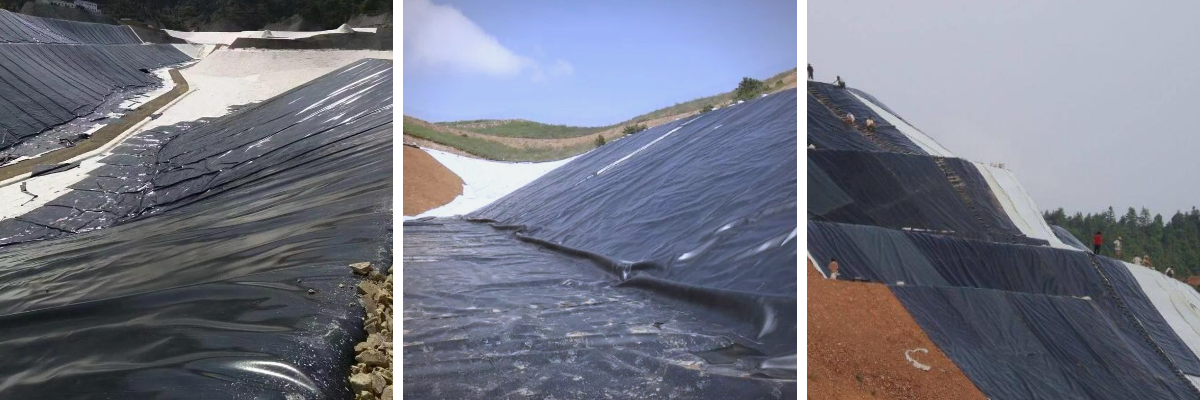
Landfill Slope Systems: The biggest challenge here is interlayer sliding on inclined surfaces. The textured surface locks the liner firmly with upper and lower cushion layers, eliminating displacement and structural instability.
Mining Heap Leach Pads: These projects face dual threats of heavy equipment load and chemical liquid erosion. The liner’s balanced mechanical strength and chemical resistance ensure safe, long-term containment.
Tailings Storage Facilities: Persistent wet conditions and heavy soil pressure easily cause liner slippage. Double-sided textured designs optimize bonding with both soil and geotextiles for stable long-term operation.
2. Scenario Suitability Reference
Application Scenario | Suitability Level |
Landfill slope lining | High |
Mining heap leach pad | High |
Reservoir flat bottom | Medium |
Ordinary flat pond lining | Low |
Simply put, textured geomembranes shine in slope and industrial projects, while smooth liners remain sufficient for flat, low-risk water ponds.
IV. Installation Considerations and Quality Control
Textured geomembranes perform better but require more standardized installation than smooth alternatives. Proper construction is key to unlocking its full stability value.
1. Slope Installation Standards
Slope laying requires strict anchoring treatment at the slope crest and toe to avoid liner shifting. Meanwhile, thorough substrate cleaning and leveling is essential—residual sharp debris will damage the liner and compromise friction performance.
2. Welding and Professional Testing
Due to its rough surface, the 1.5mm textured geomembrane needs precise hot wedge and extrusion welding to ensure seamless, leak-proof joints. Post-construction testing is non-negotiable for quality control:
Test Method | Core Testing Purpose |
Air Pressure Test | Verify seam integrity and hidden leakage points |
Vacuum Test | Full surface leak detection for complex slope areas |
Shear Test | Confirm interface friction and overall structural stability |
Though installation demands extra care, the payoff is a far more stable containment system that avoids costly post-construction failures.
V. Cost Factors and Lifecycle Value
Many clients hesitate to choose textured geomembranes due to slightly higher upfront costs. But when you calculate full lifecycle value, it’s clearly the more cost-effective choice for high-risk projects.
1. Core Cost Influencing Factors
Its manufacturing cost is affected by HDPE resin raw material prices, specialized surface texturing processes, and strict thickness uniformity requirements, leading to a marginally higher initial investment than smooth liners.
2. Cost and Performance Comparison
Evaluation Factor | Smooth Geomembrane | Textured Geomembrane |
Initial Material Cost | Lower | Slightly Higher |
Friction Performance | Low | High |
Slope Stability | Moderate, risky | Excellent, reliable |
Long-Term Failure Risk | High | Low |
The biggest value of the 1.5mm textured geomembrane lies in long-term savings: it eliminates slope failure risks, cuts repeated maintenance costs, and maintains stable performance for decades, greatly reducing total project lifecycle expenses.
VI. Practical Selection Strategy
To make the most of this liner, you need to match its specifications to your project’s actual conditions.
1. When to Choose Textured Geomembrane
Always opt for textured geomembranes for steep slopes, multi-layer liner systems, and mining/landfill projects that require high interface friction and structural stability.
2. Single-Sided vs Double-Sided Selection
Single-sided textured liners work well for moderate slope projects, while double-sided options are the safer choice for critical, high-load industrial slopes and tailings facilities.
3. Choose Professional Suppliers
Reliable manufacturers deliver consistent texturing quality, full GRI GM13 compliance, and professional installation guidance, helping you avoid substandard materials and construction errors.
VII. Conclusion
The 1.5mm textured geomembrane is more than just an upgraded liner—it’s a targeted engineering solution for slope instability risks. It perfectly combines the proven impermeability of standard HDPE geomembranes with industry-leading friction performance, fixing the hidden flaws that cause most slope containment failures. For landfills, mining heap leach pads, and tailings storage facilities, this liner delivers unmatched safety, stability, and long-term reliability. When selecting containment materials, smart engineering decisions prioritize long-term system stability over temporary cost savings, making the 1.5mm textured geomembrane the ideal choice for high-demand modern projects.