Español
 Francés
 Русский
 Indonesia
 العربية
 Português
 Deutsch
 ไทย
ไทย
 Pilipino


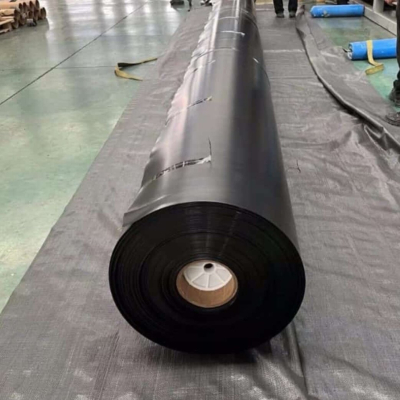
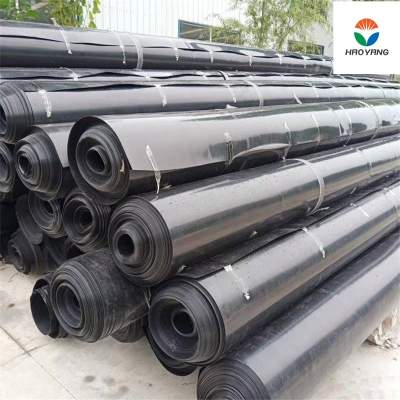
Smooth Geomembrane
1. Smooth geomembrane delivers superior impermeability, acting as a reliable barrier to stop liquid seepage for flat containment projects.
2. Uniform smooth surface enables seamless hot welding, lowering leakage risks and simplifying on-site construction.
3. UV-resistant HDPE composition offers stable chemical tolerance against leachate, wastewater and agricultural fluids.
4. Cost-effective wide roll specifications suit landfills, ponds and reservoirs with flat base terrain for large-scale projects.
Smooth Geomembrane: High-Performance HDPE Liner for Flat Containment Projects
For flat-base containment facilities including water ponds, reservoir bottoms, landfill base liners, and industrial lagoons, surface friction is rarely a priority. Instead, project owners prioritize seamless welding, consistent thickness distribution, and flawless anti-seepage performance. This is where a smooth geomembrane truly stands out. Manufactured with uniform flat HDPE surface texture, this liner delivers stable barrier performance, easy installation, and long-term reliability for all flat terrain containment systems. Unlike textured alternatives designed for slope stability, smooth geomembrane focuses on weld precision and full-area seepage blocking, making it the most cost-effective choice for low-gradient engineering projects.
I. Core Structural and Material Advantages of Smooth Geomembrane
What differentiates professional smooth geomembrane from generic plastic liners is its standardized polymer structure and consistent surface uniformity. These inherent material features lay the foundation for reliable long-term containment performance in various civil and environmental projects.
1. Uniform Surface and Dense Molecular Structure
Premium smooth geomembrane adopts virgin HDPE resin with a density of no less than 0.94 g/cm³, forming a non-porous and fully flat surface without texture bumps or uneven spots. This uniform structure eliminates hidden gaps that easily trap water, sediment, or chemical residues. For large flat pond and landfill base projects, this means cleaner liner operation and fewer localized corrosion points over decades of service.
2. Verified Basic Physical Performance Data
All specifications comply with GRI GM13 and ASTM D6693 industrial standards, ensuring stable mechanical performance under conventional hydrostatic pressure and ground settlement. The table below lists authoritative parameters for mainstream smooth geomembrane specifications:
Performance Index | 1.0mm Smooth Geomembrane | 1.5mm Smooth Geomembrane | Test Standard |
Tensile Strength at Yield | ≥ 15 kN/m | ≥ 21 kN/m | ASTM D6693 |
Tensile Strength at Break | ≥ 27 kN/m | ≥ 38 kN/m | ASTM D6693 |
Elongation at Break | ≥ 700% | ≥ 700% | ASTM D6693 |
Puncture Resistance | ≥ 240 N | ≥ 480 N | ASTM D4833 |
Oxidative Induction Time | ≥ 100 min | ≥ 100 min | ASTM D3895 |
With ultra-high elongation capacity, smooth geomembrane can adapt to minor ground deformation without cracking, effectively solving the common pain point of rigid liner fracture after long-term soil settlement.
II. Superior Weldability and Construction Efficiency
When working on large-area flat projects, welding quality directly determines the overall anti-seepage effect. Thanks to its flat and smooth surface, smooth geomembrane achieves far more consistent welding results than textured liners, greatly reducing construction difficulty and hidden leakage risks.
1. Welding Precision Advantage
The flat surface of smooth geomembrane allows hot wedge and extrusion welding equipment to fit tightly with the liner material. Welded joints achieve uniform fusion, with peel and shear strength reaching 90% to 100% of the parent material. In contrast, textured liners often produce incomplete fusion due to uneven surface contact, leaving tiny leakage gaps that are hard to detect during initial inspection.
2. On-Site Construction Cost Saving
Stable welding performance lowers the rework rate significantly, shortening overall project cycles. The following comparison clearly shows the practical construction advantages of smooth geomembrane for flat terrain projects:
Construction Factor | Smooth Geomembrane | |
Welding Fit Degree | Full contact, uniform fusion | Partial gap, uneven fusion |
Rework Probability | Low | Medium to High |
Flat Laying Efficiency | High, easy leveling | Low, requires extra adjustment |
For large-scale flat-base projects, this construction advantage translates into lower labor costs and more reliable long-term anti-seepage stability.
III. Environmental Resistance and Long-Term Durability
Outdoor containment facilities face continuous erosion from ultraviolet rays, temperature changes, and chemical liquids. Smooth geomembrane is formulated with stable HDPE ingredients and standardized carbon black content to maintain consistent performance in harsh natural environments.
1. UV and Temperature Adaptability
Qualified smooth geomembrane contains 2.0% to 3.0% carbon black additives, which effectively block ultraviolet radiation. After 2000 hours of accelerated UV aging testing, the material retains over 88% of its original tensile strength. It operates stably within a temperature range of -40°C to 60°C, resisting brittle cracking in cold winters and softening deformation in high-temperature summers.
2. Chemical Inertness for Industrial Scenarios
Smooth HDPE geomembrane features excellent chemical stability, remaining inert in pH 2 to pH 13 environments. It resists corrosion from domestic sewage, aquaculture wastewater, landfill leachate, and conventional mining wastewater. This avoids the aging and failure issues of low-grade liners caused by long-term chemical erosion.
IV. Targeted Application Scenarios and Pain Point Solutions
Smooth geomembrane is not a universal replacement for textured liners, but it delivers unmatched cost-performance in flat and low-slope containment scenarios. It precisely solves multiple common engineering pain points in water storage and environmental protection projects.
1. Core Application Matching
Application Scenario | Recommended Thickness | Solved Core Pain Point |
Aquaculture Flat Pond | 1.0mm | Water seepage and water quality instability |
Reservoir Flat Base | 1.0–1.5mm | Long-term hydrostatic seepage loss |
Landfill Base Liner | 1.5–2.0mm | Leachate penetration and groundwater pollution |
Municipal Sewage Lagoon | 1.5mm | Wastewater corrosion and liner aging |
2. Scenario Selection Principles
Simply put, choose smooth geomembrane for all flat or gently sloped (below 10°) containment areas. Its smooth surface does not affect stability on flat ground, while better welding performance and lower material cost create higher overall project value. For steep slope structures, textured geomembrane is still the more appropriate choice.

V. Lifecycle Value and Cost Performance
Many buyers mistakenly believe smooth geomembrane is a low-grade alternative to textured products. In fact, it is a targeted optimized solution for flat projects, with more reasonable lifecycle cost input and lower failure risks in applicable scenarios.
1. Lifespan and Maintenance Advantage
Under standard outdoor burial and exposure conditions, smooth HDPE geomembrane has a service life of 15 to 20 years, and over 40 years when fully covered by soil or water. Its smooth surface is not easy to accumulate sediment and impurities, requiring only simple annual visual inspection and cleaning, with almost no frequent maintenance costs.
2. Comprehensive Cost Comparison
Cost Factor | Smooth Geomembrane | Textured Geomembrane |
Unit Material Cost | Economical | Slightly Higher |
Flat Construction Cost | Lower | Higher |
Long-Term Failure Risk | Very Low | Low |
For flat-base projects, forced use of textured geomembrane will only cause unnecessary cost waste without bringing additional performance benefits.
VI. Conclusion
Smooth geomembrane is the most practical and cost-effective anti-seepage solution for flat and low-gradient containment engineering. With uniform flat surface for precise welding, verified mechanical and environmental resistance, stable long-term durability, and targeted scenario adaptability, it efficiently solves common problems such as water seepage, liner aging, and difficult construction in ponds, reservoirs, landfills, and sewage lagoons. When selecting geomembrane products, matching smooth or textured types according to actual terrain conditions is the key to maximizing project safety and economic value.