Español
 Francés
 Русский
 Indonesia
 العربية
 Português
 Deutsch
 ไทย
ไทย
 Pilipino


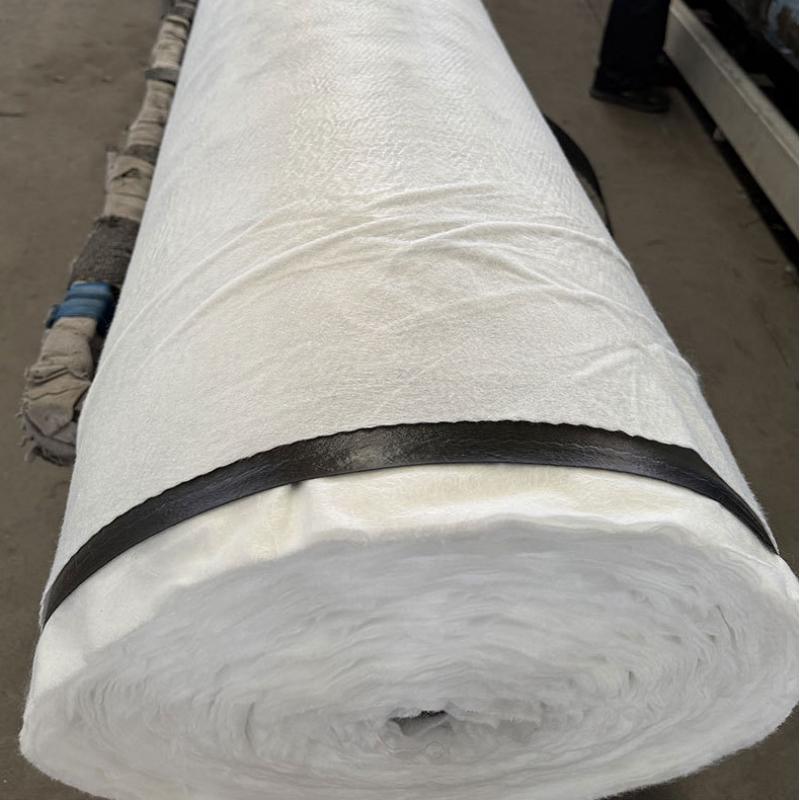
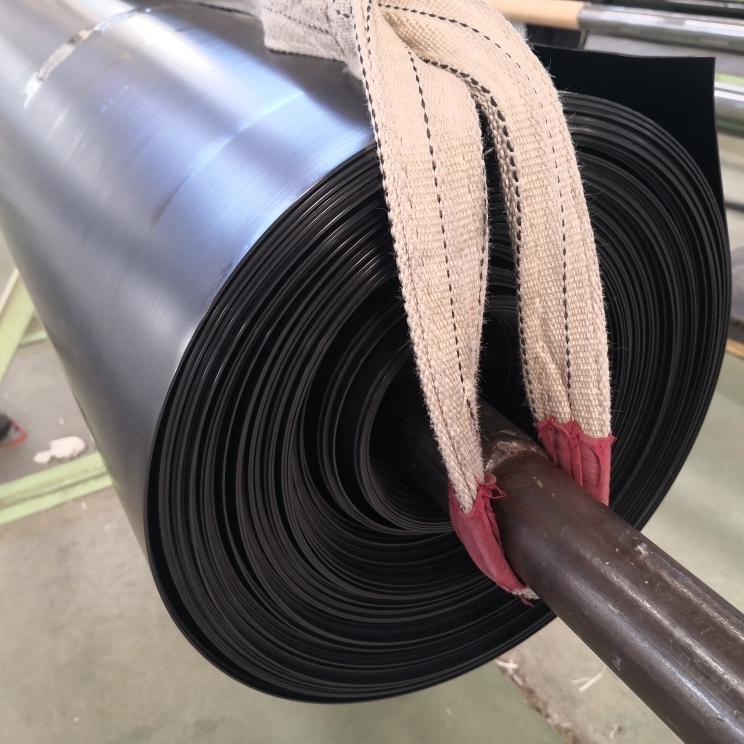
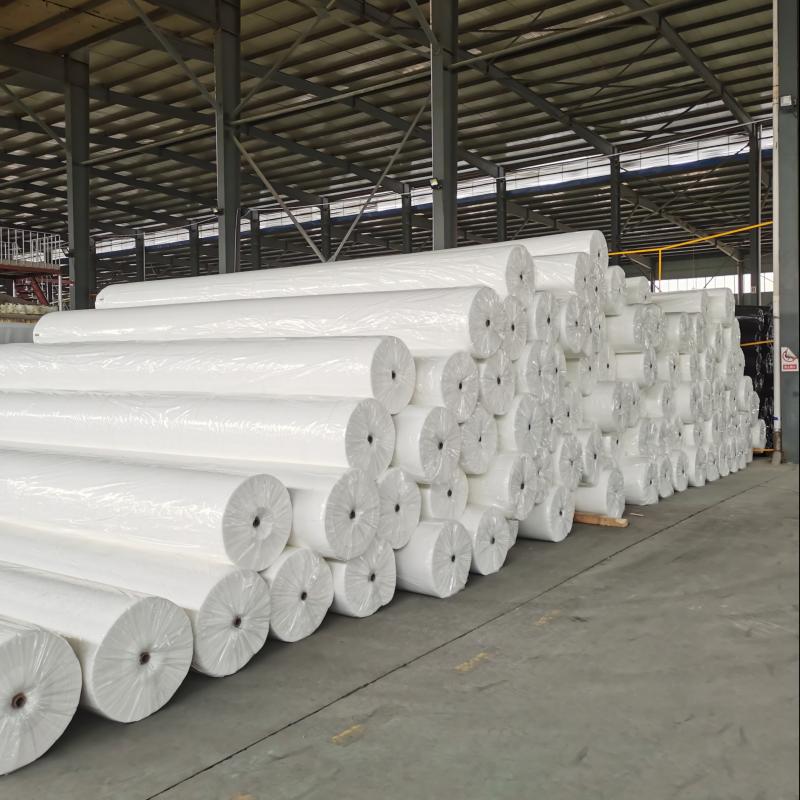
Geomembrane and Geotextile
This matched geosynthetic system delivers reliable impermeable barriers plus effective filtration for landfill and hydraulic projects.
Durable geotextile layers cushion and shield geomembrane from abrasion, punctures and ground friction damage.
Optimized structural synergy boosts slope stability and relieves underground water pressure for long-term site safety.
Weather-resistant composite design cuts long-term maintenance and adapts to complex harsh construction conditions.
Geomembrane and Geotextile: Synergistic Geosynthetics for Modern Civil & Environmental Projects
Most new project managers make a common mistake: choosing either geomembrane or geotextile alone, not realizing these two geosynthetics work best as a matched system. Individually, each material has clear limitations, but combining geomembrane and geotextile creates a high-performance solution that solves leakage, soil erosion, liner damage, and poor drainage issues. Widely used in landfills, aquaculture ponds, reservoirs, and civil reinforcement projects, geomembrane and geotextile combinations deliver reliable stability and long-term protection that single materials simply cannot match.
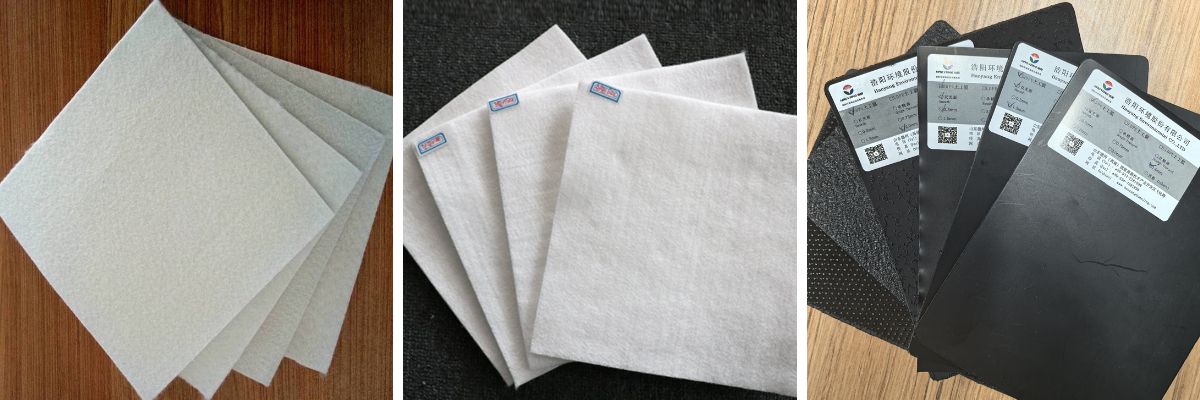
I. Core Functional Differences & Complementary Mechanisms
To understand why geomembrane and geotextile are industry staples, you first need to know their unique roles. Simply put, geomembranes block water while geotextiles manage water—this opposing yet cooperative function forms the foundation of modern geosynthetic engineering.
1. Functional Parameter Comparison
Material | Core Feature | Permeability Rate | Primary Functions | Main Limitation When Used Alone |
Geomembrane | Impermeable barrier | ≤1×10⁻¹³ cm/s | Anti-seepage, containment, isolation | Vulnerable to puncture and abrasion damage |
Geotextile | Permeable fabric layer | ≥1×10⁻² cm/s | Filtration, drainage, separation, reinforcement | Cannot block liquid seepage |
2. Synergy Effect of Combined Use
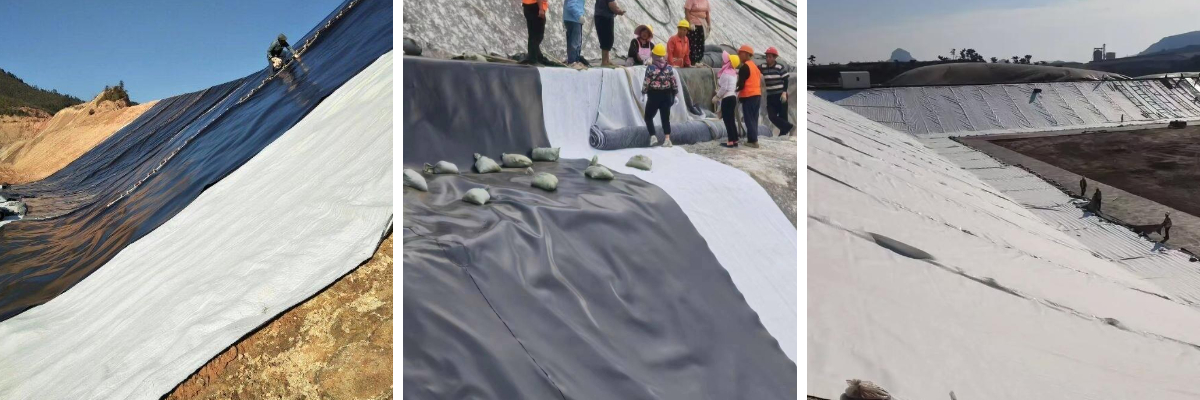
When paired together, geomembrane and geotextile perfectly offset each other’s weaknesses. The geotextile acts as a protective cushion between rough soil, stones, and the smooth geomembrane surface, preventing friction and puncture damage. Meanwhile, the geomembrane provides permanent anti-seepage protection while the geotextile drains accumulated water pressure, avoiding liner bulging or failure caused by underground water buildup. This synergy drastically improves overall project stability.
II. Dramatically Improved Durability & Puncture Resistance
One of the biggest onsite pain points is premature geomembrane damage during backfilling and long-term soil settlement. Loose gravel, sharp rock fragments, and continuous ground pressure easily damage standalone geomembranes. Adding a geotextile protective layer completely changes this outcome.
1. Mechanical Performance Enhancement Data
Working Condition | Puncture Resistance | Abrasion Resistance | Long-Term Survival Rate |
Single Geomembrane (1.5mm HDPE) | 320 N | Basic protection | 72% |
Geomembrane + Geotextile Layer | 780 N | Strong anti-wear performance | 96% |
2. Long-Term Aging Stability
Geotextile layers effectively isolate direct UV exposure and temperature changes on geomembranes, slowing material aging and oxidation. Field data shows that geomembrane and geotextile composite systems maintain over 88% of original tensile strength after 2000 hours of UV exposure, while standalone geomembranes drop below 70%. This extended lifespan greatly reduces reconstruction and maintenance frequency.
III. Optimized Drainage & Soil Stabilization Performance
Many containment failures are not caused by leakage, but by hidden water pressure buildup. Without a drainage layer, underground water accumulates behind the geomembrane, causing liner floating, deformation, and structural instability. This is where geotextile’s drainage advantage shines.
1. Filtration & Drainage Advantages
Soil Separation: Geotextiles block fine soil particles from migrating while allowing water to pass through, preventing foundation soil loss and substrate hollowing.
Pressure Relief: Continuous geotextile drainage channels reduce underground water pressure by over 35%, protecting the geomembrane barrier structure.
Anti-Clogging Performance: Stable pore structure avoids silt blockage, maintaining long-term drainage efficiency for reservoir and landfill projects.
2. Slope & Foundation Reinforcement
The high tensile strength of geotextiles improves overall soil shear strength, enhancing slope stability for pond embankments and landfill slopes. When combined with geomembranes, the composite system avoids sliding and deformation during rainy seasons or soil settlement, solving the common headache of slope collapse and liner displacement.
IV. Wide Application Coverage for Multiple Industrial Scenarios
The flexible matching of geomembrane and geotextile makes them suitable for almost all geosynthetic containment projects, adapting to diverse environmental and geological conditions.
1. Typical Project Application Scenarios
Project Type | Core Benefit of Composite System | Solving Key Pain Point |
Landfill & Wastewater Pond | Anti-leachate seepage + drainage protection | Groundwater contamination and liner corrosion |
Aquaculture & Agricultural Reservoir | Stable water level + liner anti-tear | Water loss and substrate sharp object damage |
Road & Slope Reinforcement | Foundation stabilization + waterproof isolation | Roadbed water damage and slope sliding |
Mining Tailings Pond | Chemical corrosion resistance + anti-seepage | Acid-base liquid seepage and liner aging |
2. Environmental Compliance Value
Geomembrane and geotextile composite systems strictly meet international environmental engineering standards. The impermeable geomembrane prevents pollutant diffusion, while the geotextile ensures stable foundation drainage, helping projects pass environmental inspections and avoid operational penalties.
V. Factory Quality Assurance
We supply high-quality geomembrane and geotextile matched systems with full compliance to ASTM and GRI standards. All geomembranes adopt virgin HDPE material with ultra-low permeability, while supporting geotextiles feature uniform pore distribution and high tensile strength. Every batch undergoes strict puncture, tensile, and anti-aging testing before delivery.
We provide customized thickness and weight matching solutions for different project needs, from light agricultural ponds to heavy industrial environmental containment. Our professional technical team also offers onsite layout and installation guidance to maximize system performance.
VI. FAQ
1. Why use geomembrane and geotextile together instead of single material?
Single geomembrane is easily punctured, while single geotextile cannot prevent seepage. Their combination achieves perfect integration of anti-seepage, drainage, protection and reinforcement, ensuring long-term project safety.
2. What is the standard laying structure for the composite system?
The standard structure is subgrade, bottom geotextile cushion, geomembrane liner, top geotextile protective layer, and filling layer, forming a complete stable protection system.
3. Is the composite system suitable for harsh weather conditions?
Yes, both materials feature excellent UV resistance, cold resistance and chemical stability, working stably within -40°C to 60°C for all climate zones.
4. Does the composite system extend project service life?
Properly installed geomembrane and geotextile systems can serve 15–20 years, effectively avoiding frequent maintenance and renovation caused by single material failure.
VII. Final Summary
Geomembrane and geotextile represent the most practical and high-efficiency geosynthetic combination for modern engineering. Their complementary advantages solve seepage, damage, drainage and stability problems that plague single material solutions. For any containment, reinforcement and environmental protection project, choosing matched geomembrane and geotextile systems is the most reliable way to guarantee long-term operational safety.