Español
 Francés
 Русский
 Indonesia
 العربية
 Português
 Deutsch
 ไทย
ไทย
 Pilipino


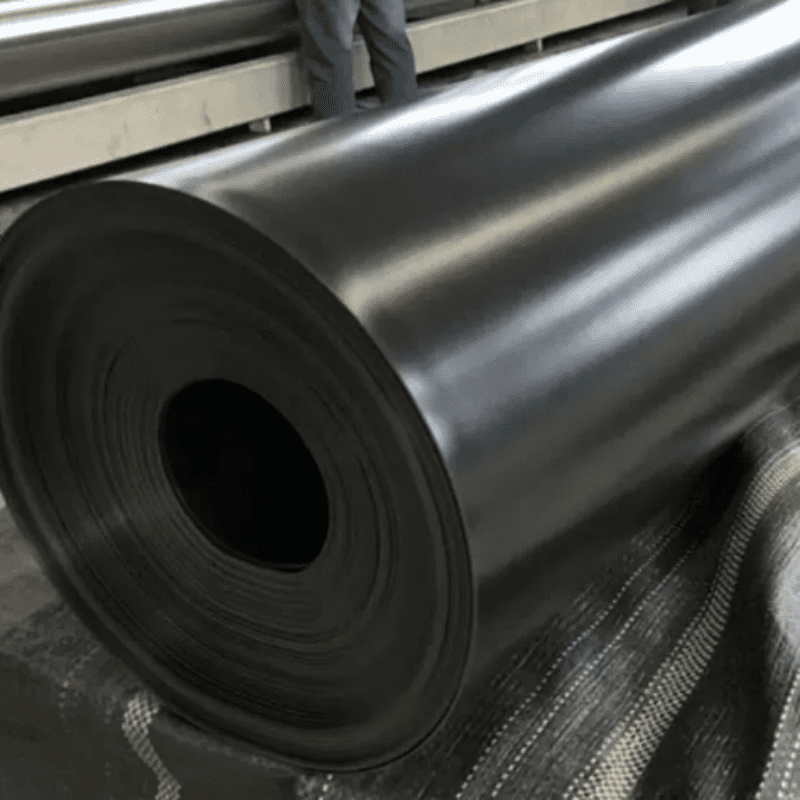
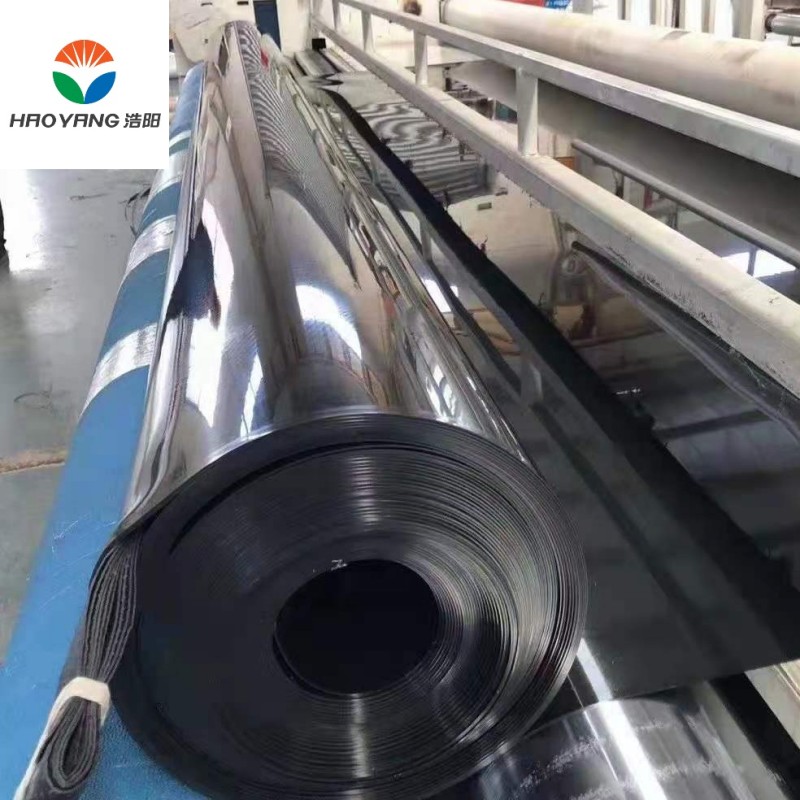
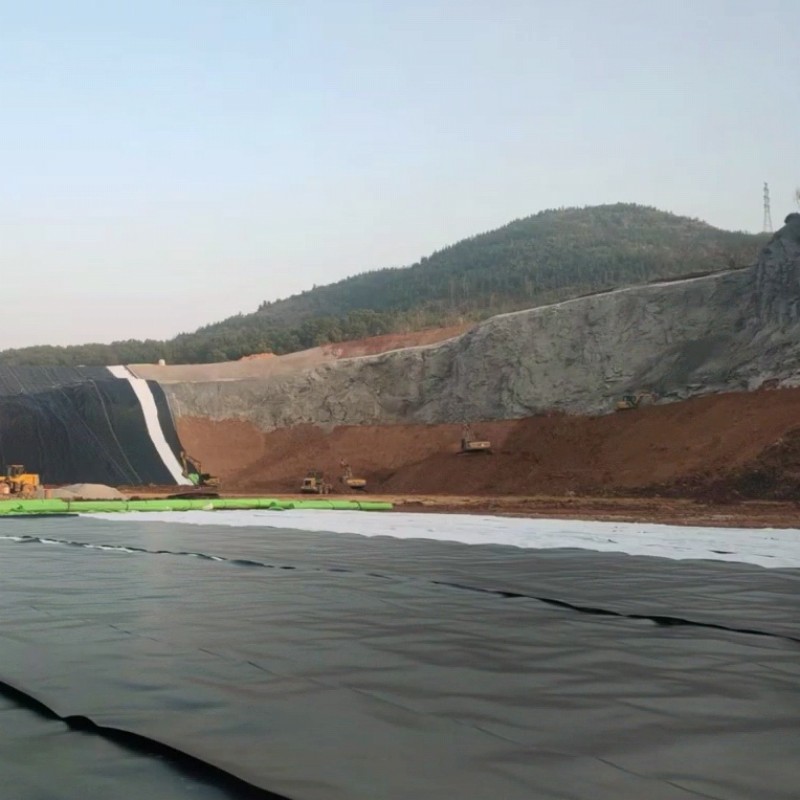
HDPE dam liners are high-performance geomembranes designed for water storage, seepage control, and environmental protection applications. They are widely used in reservoirs, irrigation systems, mining ponds, aquaculture farms, and industrial containment projects.
With excellent impermeability and long service life, HDPE liners have become one of the most trusted materials in modern civil and environmental engineering.
Why HDPE Dam Liners Are Widely Used
Water leakage is one of the most critical problems in dam and reservoir projects. Traditional clay or concrete structures often fail to provide long-term sealing performance.
HDPE geomembrane liners solve this problem by forming a continuous impermeable barrier that isolates water from soil and prevents seepage losses.
They are especially suitable for large-scale projects where stability, durability, and cost efficiency are key requirements.Key Advantages of HDPE Dam Liners
1. Excellent Impermeability
HDPE material provides extremely low permeability, effectively preventing water loss and protecting surrounding soil and groundwater.
2. High Mechanical Strength
Strong tensile strength
Excellent puncture resistance
Reliable performance under load and settlement conditions
3. UV and Weather Resistance
Designed with carbon black and stabilizers, HDPE liners can withstand long-term exposure to sunlight, rain, and temperature variations.
4. Chemical Resistance
Resistant to acids, alkalis, salts, and many industrial chemicals, making it suitable for mining and wastewater projects.
5. Flexible Installation
HDPE liners can adapt to uneven ground surfaces and complex dam geometries, ensuring fast and efficient installation.
6. Long Service Life
Under proper installation conditions, service life can exceed 20 years with minimal maintenance requirements.
Application Scenarios
HDPE dam liners are widely used in:
Agricultural irrigation reservoirs
Fish farming and aquaculture ponds
Mining tailings and leachate ponds
Rainwater harvesting systems
Industrial liquid storage dams
Environmental protection containment systems
Their versatility makes them suitable for both small farms and large infrastructure projects.
Customer Feedback
✔ Agricultural Project – Kenya
“We installed HDPE dam liners for our irrigation reservoir. The material is strong and stable, and water loss has been significantly reduced. Very satisfied with the performance.”
✔ Aquaculture Farm – Ecuador
“The liner quality is consistent. Installation was fast, and it has helped us maintain stable water levels for fish farming operations.”
✔ Mining Project – Southeast Asia
“The product performs well under harsh conditions. It resists chemical exposure and heavy load pressure without failure.”
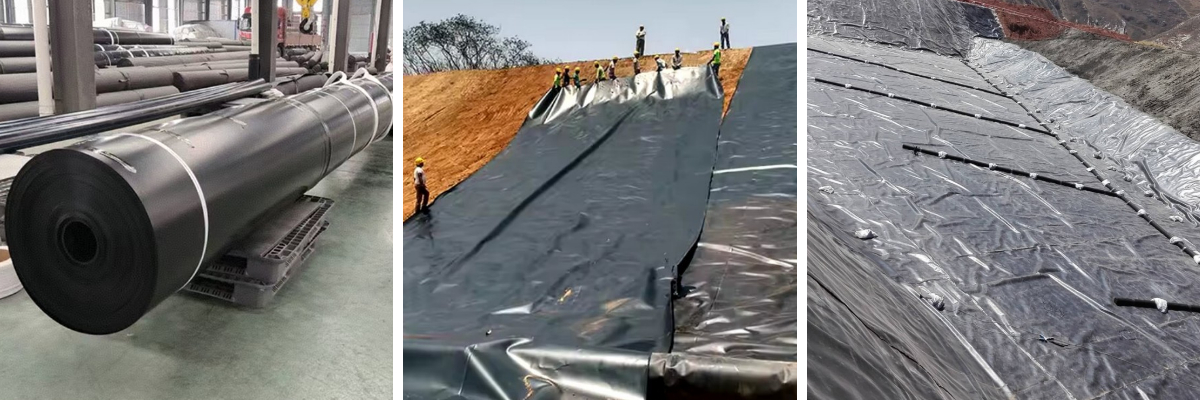
Installation Overview
Proper installation is critical to ensure performance:
Surface preparation and leveling
Liner deployment with minimal tension
Welding using hot wedge or extrusion welding
Seam inspection and quality testing
Protective layer installation if required
Professional installation ensures maximum lifespan and sealing performance.
Frequently Asked Questions (FAQ)
Q1: What thickness is recommended for dam applications?
Common thickness ranges from 1.0mm to 1.5mm. Larger reservoirs or mining projects may require thicker options for added durability.
Q2: How long does HDPE dam liner last?
Typically 20–30 years, depending on installation quality, environmental conditions, and material specification.
Q3: Can HDPE liners handle extreme weather?
Yes. They are designed for UV exposure, high temperatures, and freezing conditions.
Q4: Is HDPE liner safe for water storage?
Yes. It is chemically stable and widely used in drinking water reservoirs, irrigation systems, and aquaculture.
Q5: Can damaged liners be repaired?
Yes. Damaged sections can be repaired using thermal welding or patching without replacing the entire system.
No. | Item | Unit | Index | ||||||||
1 | Thickness | mm | 0.30 | 0.50 | 0.75 | 1.00 | 1.25 | 1.50 | 2.00 | 2.50 | 3.00 |
2 | Density | g/cm3 | ≧0.940 | ||||||||
3 | Tensile yield strength | N/mm | ≧4 | ≧8 | ≧11 | ≧15 | ≧18 | ≧22 | ≧29 | ≧37 | ≧44 |
4 | Tensile breaking strength | N/mm | ≧7 | ≧14 | ≧20 | ≧27 | ≧33 | ≧40 | ≧53 | ≧67 | ≧80 |
5 | Yield elongation | % | - | - | - | ≧12 | |||||
6 | Break Elongation | % | ≧700 | ||||||||
7 | Right-angle Tearing strength | N | ≧34 | ≧63 | ≧94 | ≧125 | ≧156 | ≧187 | ≧249 | ≧311 | ≧374 |
8 | Puncture strength | N | ≧100 | ≧160 | ≧240 | ≧320 | ≧400 | ≧480 | ≧640 | ≧800 | ≧960 |
9 | Carbon black content | % | 2.0~3.0 | ||||||||
10 | Dispersion of carbon black | - | There is not more than one level 3 in 10 data, and level 4 and level 5 are not allowed to exist. | ||||||||
11 | Oxidation induction time | min | ≧100 | ||||||||
12 | Low temperature impact embrittlement properties | - | Pass | ||||||||
13 | Water vapor permeability coefficient | g.cm/ (cm2.s.Pa) | ≦1.0*10-13 | ||||||||
14 | Dimensional stability | % | ±2.0 | ||||||||
Note | Technical performance indicators for thickness specifications not listed in the table are required to be performed by interpolation. | ||||||||||
HDPE dam liners provide a reliable, cost-effective, and long-lasting solution for modern water containment projects. With strong impermeability, excellent durability, and wide application flexibility, they are an ideal choice for agricultural, industrial, and environmental engineering applications.