Español
 Francés
 Русский
 Indonesia
 العربية
 Português
 Deutsch
 ไทย
ไทย
 Pilipino


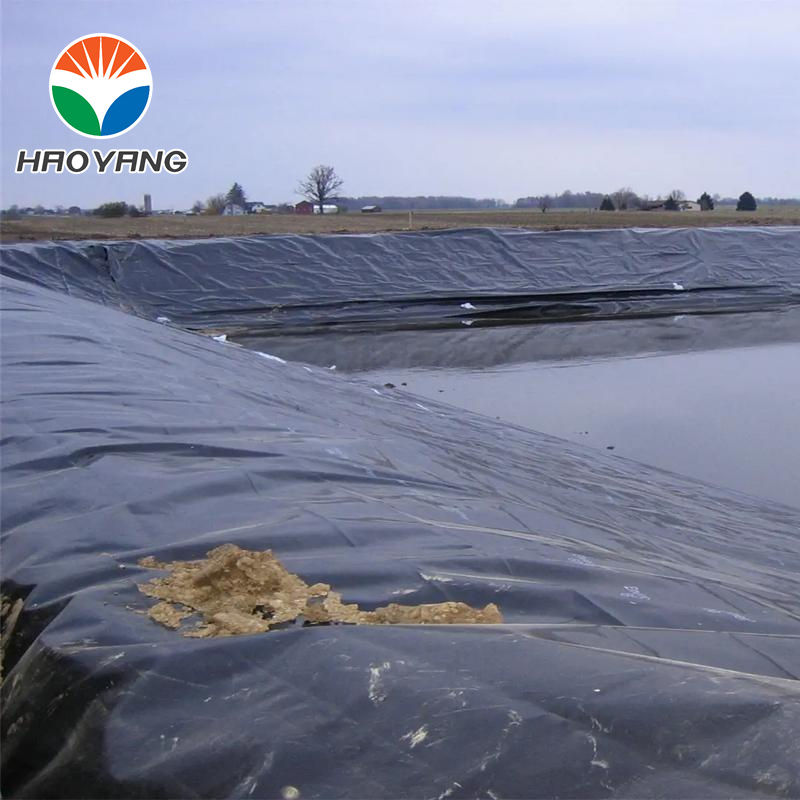
Large Pond Liners
1. Heavy-duty large pond liners feature ultra-low permeability to eliminate massive seepage and stabilize water levels for commercial-scale water bodies.
2. UV-stabilized HDPE material delivers outstanding weather and chemical resistance for year-round outdoor long-term operation.
3. High tensile and puncture tolerance withstands heavy hydrostatic pressure and rough substrate damage on large pond sites.
4. Wide-roll flexible design cuts installation seams, simplifying fast, leak-free lining for irregular and expansive pond terrain.
Large Pond Liners: Durable HDPE Solutions for Commercial & Industrial Water Containment
Commercial fish farms, large irrigation reservoirs, municipal lagoons, and landscape retention lakes all share one common challenge: sustaining stable water volume and long-term structural integrity across expansive surface areas. Many site owners rely on traditional clay bases or thin plastic sheets, only to face persistent seepage, seasonal cracking, and frequent repairs that drive up operational costs. High-performance large pond liners solve these widespread issues with reliable impermeability, industrial-grade durability, and scalable sizing built specifically for big water containment projects. This guide breaks down verified performance data, practical application matches, professional installation standards, and long-term operational value to help you select the ideal liner for large-scale pond systems.
I. Core Performance Advantages of HDPE Large Pond Liners
To understand why premium large pond liners outperform traditional lining methods, it helps to analyze their hydraulic stability, mechanical toughness, and environmental resistance. These engineered properties directly address the most common failure points in large-area water containment infrastructure.
1. Near-Zero Permeability Stops Excessive Water Loss
Unlined or clay-lined large ponds lose massive volumes of water through underground seepage, especially on sandy or uneven soil substrates. HDPE large pond liners feature a dense non-porous molecular structure that minimizes liquid migration, delivering consistent water retention year-round.
Material Type | Permeability Coefficient (cm/s) | Daily Water Loss Per Hectare | Key Weakness |
HDPE Large Pond Liner | ≤ 1×10⁻¹³ | Less than 0.1 mm | Requires professional hot welding for full seam integrity |
Compacted Clay Liner | 1×10⁻⁷ ~ 1×10⁻⁹ | 15–30 mm | Prone to cracking during drought and freeze-thaw cycles |
PVC Pond Liner | 1×10⁻¹¹ ~ 5×10⁻¹¹ | 5–12 mm | Degrades quickly under prolonged UV exposure |
For commercial operations spanning multiple hectares, this drastic reduction in seepage stabilizes water levels, cuts repeated pumping work, and maintains consistent aquatic and hydraulic conditions throughout the year.
2. Industrial Mechanical Strength Resists On-Site Damage
Large pond environments face continuous stress from hydrostatic pressure, ground settlement, sharp substrate debris, and regular operational activity. Low-grade liners easily puncture or tear, leading to sudden leakage and system downtime. Standard HDPE large pond liners meet strict GRI GM13 and ASTM industry standards for long-term structural stability.
Performance Index | 1.0mm HDPE Liner | Test Standard | |
Tensile Strength at Break | ≥ 27 kN/m | ≥ 38 kN/m | ASTM D6693 |
Elongation at Break | ≥ 700% | ≥ 700% | ASTM D6693 |
Puncture Resistance | ≥ 240 N | ≥ 480 N | ASTM D4833 |
Oxidative Induction Time | ≥ 100 min | ≥ 100 min | ASTM D3895 |
High elongation properties allow the liner to flex naturally with minor soil movement, preventing the brittle cracking that plagues rigid clay and thin plastic alternatives.
II. Practical Application Scenarios & Pain Point Solutions
Different large pond projects carry unique environmental and operational challenges. Matching the correct large pond liner specification directly resolves common industry pain points while maximizing long-term performance and safety.
1. Commercial Aquaculture Ponds
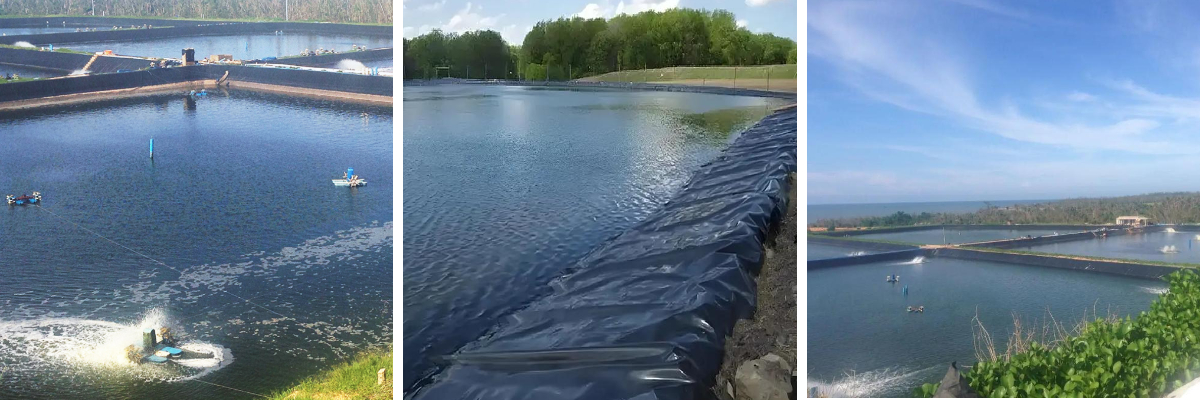
Many large fish and shrimp farms struggle with unstable water quality caused by constant seepage and contaminated groundwater infiltration. Sharp aquatic activity and routine farming operations also damage thin liners, creating frequent repair needs. Food-grade HDPE large pond liners provide a non-toxic, inert barrier that preserves water quality, supports healthy aquatic growth, and resists routine on-site abrasion.
2. Agricultural Irrigation Reservoirs
Farms relying on large seasonal reservoirs often face severe water loss during dry seasons due to permeable soil bases. This increases reliance on pumping systems and raises operational costs. Durable large pond liners lock in stored irrigation water, maintain consistent capacity, and reduce dependence on external water sources throughout growing cycles.
3. Municipal Wastewater & Lagoon Systems
Wastewater lagoons contain acidic, alkaline, and organic contaminants that degrade low-quality liners over time. Liner failure leads to soil and groundwater pollution and regulatory non-compliance. Heavy-duty large pond liners deliver reliable chemical stability across pH 2 to pH 13 ranges, ensuring safe, long-term waste containment.
4. Landscape & Stormwater Retention Ponds
Large public landscape lakes and stormwater ponds feature irregular shorelines and uneven terrain that complicate traditional rigid lining methods. Flexible wide-width large pond liners adapt naturally to complex shapes, delivering seamless coverage and consistent water retention for aesthetic and flood-control water systems.
Project Type | Recommended Thickness | Core Functional Requirement |
Commercial Aquaculture Ponds | 1.0 mm | Fish-safe, anti-puncture, stable water environment |
Agricultural Irrigation Reservoirs | 1.0–1.5 mm | High hydrostatic pressure resistance |
Municipal Wastewater Lagoons | 1.5–2.0 mm | Chemical corrosion and aging resistance |
Landscape & Stormwater Ponds | 0.75–1.0 mm | Flexible terrain adaptation and clean appearance |
III. Installation Advantages & Professional Quality Control
For large-scale pond construction, installation efficiency and precise quality control determine the overall success of the lining system. Modern large pond liners are engineered to simplify large-area deployment while maintaining strict performance standards.
1. Large-Scale Construction Efficiency
Wide factory roll widths minimize the total number of seams required for expansive pond surfaces, significantly cutting labor time and reducing potential leakage points. The lightweight, flexible roll design allows easy transportation and laying on remote sites, eliminating the need for heavy construction equipment. Thermally welded seams create a fully integrated liner system with equal strength and impermeability as the base material.
2. Standard Post-Installation Testing Procedures
Visual inspection alone cannot guarantee integrity on large pond surfaces. Professional testing protocols ensure every section meets industrial containment standards.
Test Method | Inspection Purpose |
Air Pressure Test | Detect hidden pinhole leaks within welded seams |
Vacuum Box Test | Full surface leak detection on slopes and flat areas |
Peel Strength Test | Verify weld stability and long-term tensile performance |
IV. Lifespan Performance & Long-Term Operational Value
While alternative lining materials carry lower upfront costs, they require constant maintenance and early replacement. Premium large pond liners deliver superior long-term value through stable performance and minimal upkeep.
1. Lifespan and Maintenance Comparison
Lining System | Service Lifespan | Maintenance Frequency | Long-Term Stability |
HDPE Large Pond Liner | 15–50 years | Minimal annual inspection | Excellent |
Compacted Clay Liner | 8–12 years | Frequent crack repair and re-compaction | Poor in extreme weather |
Thin PVC Liner | 3–5 years | Regular patching and seasonal checks | Moderate |
2. Long-Term Cost Savings
By eliminating persistent seepage, repeated repairs, and premature replacement, high-quality large pond liners drastically reduce long-term operational expenses. Commercial sites avoid water waste, harvest losses, and emergency construction downtime, delivering consistent returns year after year.
V. Conclusion
Large pond liners are the most reliable, cost-effective solution for modern large-scale water containment projects. With industry-verified impermeability, exceptional mechanical durability, chemical stability, and flexible installation adaptability, they resolve the most common failures in clay and traditional plastic lining systems. Whether for commercial aquaculture, agricultural reservoirs, municipal wastewater lagoons, or landscape retention ponds, properly specified HDPE large pond liners deliver stable, long-lasting performance that protects water resources, maintains site safety, and minimizes ongoing operational costs.