Español
 Francés
 Русский
 Indonesia
 العربية
 Português
 Deutsch
 ไทย
ไทย
 Pilipino


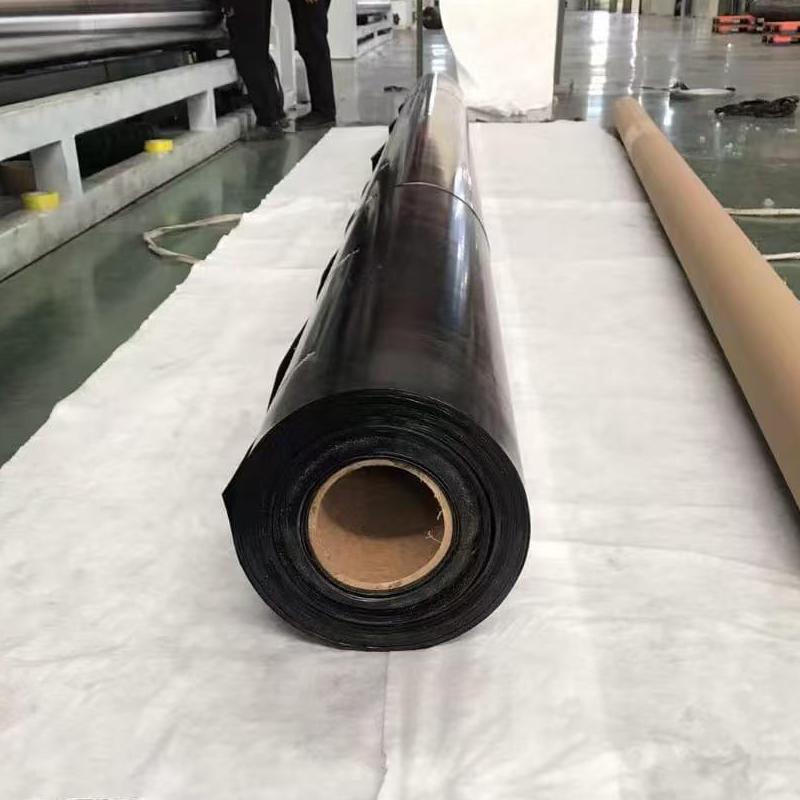
Membrane Liners
1. Engineered multi-purpose membrane liners deliver robust liquid containment and reliable seepage control across dams, ponds, landfills and wastewater facilities.
2. Reinforced polymer structure offers outstanding abrasion resistance to withstand harsh substrates and continuous water pressure.
3. Flexible, weldable membrane liner design simplifies layout on complex slopes and irregular terrain to cut construction time.
4. Features excellent chemical and UV stability to lower recurring maintenance for long-duration outdoor containment systems.
Membrane Liners: Essential Impermeable Barriers for Modern Containment & Hydraulic Projects
If you’ve spent any time managing water storage, environmental containment, or civil engineering projects, you already know how destructive unregulated seepage can be. From steadily dropping water levels in aquaculture ponds to contaminated groundwater near waste facilities, leakage is one of the most overlooked yet costly issues across geotechnical fields. This is precisely why high-performance membrane liners have become the baseline solution for professional contractors and landowners. These engineered polymer barriers deliver reliable waterproofing, structural protection, and long-term stability for nearly every containment scenario. In this in-depth guide, we will break down why membrane liners outperform traditional materials, core functional advantages, ideal use cases, and key selection tips to help you pick the perfect liner for your project.
I. Membrane Liners Outperform Traditional Containment Materials
A lot of project managers still default to old-school solutions like compacted clay and concrete for anti-seepage work. While these materials have been used for decades, they come with inherent flaws that directly drive up operational risks and hidden costs. Modern membrane liners, especially polymer-based geomembrane liners, address these pain points with superior hydraulic performance and simpler construction workflows.
1. Cross-Material Performance Comparison
To help you visualize the performance gap, we compiled verified data based on ASTM standard testing, covering the three most popular containment solutions used in hydraulic and environmental projects worldwide.
Containment Material | Hydraulic Conductivity (cm/s) | Typical Service Life | Primary Weakness |
HDPE Membrane Liners | ≤1×10⁻¹³ | 15–20 Years | Requires professional hot welding for seamless joints |
Compacted Clay | 1×10⁻⁸ ~ 1×10⁻⁷ | 8–12 Years | Susceptible to cracking during drought and freeze-thaw cycles |
Cast Concrete | 1×10⁻⁶ ~ 5×10⁻⁶ | 10–15 Years | High construction difficulty and poor terrain adaptability |
2. Core Pain Points Solved by Membrane Liners
Unlike clay that shrinks and cracks under temperature changes or concrete that cannot adapt to uneven ground settlement, flexible membrane liners eliminate two major industry headaches. First, their near-zero permeability stops passive water seepage and pollutant diffusion. Second, their flexible molecular structure absorbs minor ground deformation without structural failure, drastically cutting unexpected repair work throughout a project’s lifespan.
II. Premium Mechanical & Anti-Aging Properties
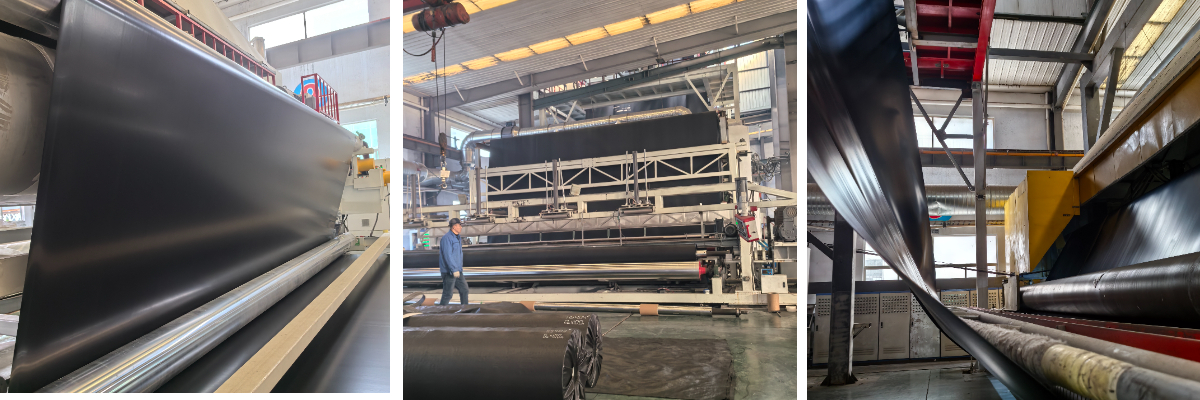
Beyond basic waterproofing, durable membrane liners must withstand harsh on-site abuse during installation and long-term burial. Sharp gravel, continuous hydrostatic pressure, UV radiation, and chemical erosion are common threats that easily damage low-grade liners. Top-tier membrane liners are engineered with reinforced polymer formulas to resist all these external stressors.
1. Authorized Mechanical Performance Data
All data below references ASTM D6693, D4833 and GRI GM13 testing standards, the universal benchmarks for commercial-grade HDPE membrane liners across North America and Europe.
Performance Metric | 1.5mm HDPE Membrane Liner | 2.0mm HDPE Membrane Liner |
Tensile Strength at Break | ≥32 kN/m | ≥38 kN/m |
Elongation at Break | ≥700% | ≥700% |
Puncture Resistance | ≥320 N | ≥400 N |
Oxidative Induction Time (OIT) | ≥100 min | ≥100 min |
2. All-Climate Environmental Resistance
High-quality membrane liners integrate carbon black and specialized antioxidant additives to boost outdoor stability. They operate consistently across a temperature range of -40°C to 60°C, and retain over 88% of original tensile strength after 2000 hours of accelerated UV aging. Additionally, these liners remain inert in pH 2 to pH 13 environments, making them immune to most fertilizers, wastewater chemicals, and mining leachate found in daily projects.
III. Flexible Installation & Seamless On-Site Adaptability
Even the highest-performance membrane liners are useless if they are difficult to deploy. One of the biggest advantages that makes membrane liners favored by contractors is their outstanding construction flexibility. Compared with rigid concrete structures, polymer membrane liners drastically simplify laying procedures and adapt to complex terrain effortlessly.
1. Key Installation Advantages
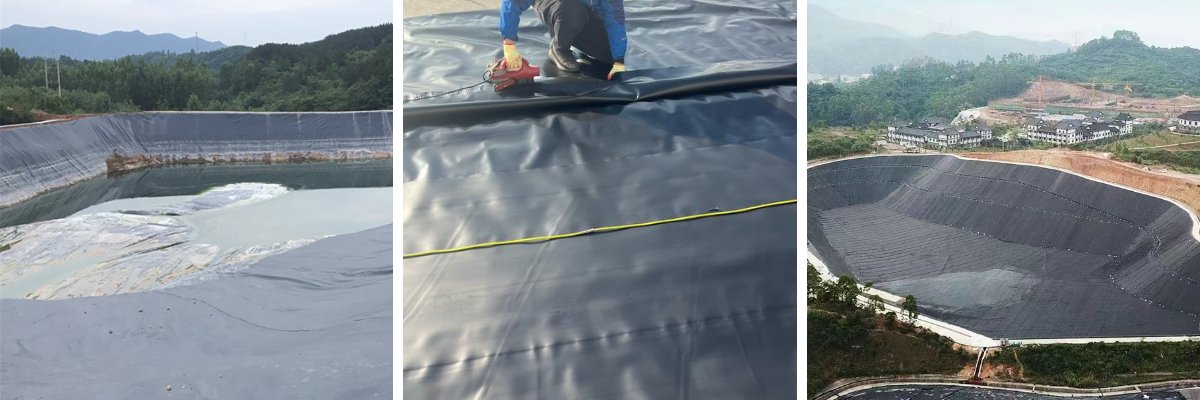
Terrain Compatibility: Membrane liners fit irregular pond shapes, curved slopes, and undulating foundations, supporting stable laying on slope angles up to 38 degrees.
Weldable Joint Design: Hot-wedge and extrusion welding creates fully sealed joints with identical impermeability to the liner itself, eliminating the weak points that plague glued alternatives.
Lightweight Handling: Roll-type packaging reduces transportation pressure and allows small teams to complete laying work without heavy mechanical equipment.
2. Complementary Usage with Geotextiles
For sites with rough, stony substrates, pairing membrane liners with a nonwoven geotextile cushion is a game-changer. The geotextile disperses concentrated friction and sharp-point pressure, further boosting the liner’s anti-puncture capability. This composite system is widely recognized as the most reliable structure for landfill cells and tailings ponds among professional engineers.
IV. Diversified Application Scenarios & Targeted Selection
What makes membrane liners such a versatile geosynthetic product is their scalable specification range. Manufacturers offer membrane liners from 0.75mm to 3.0mm, allowing tailored solutions for lightweight residential projects and heavy-duty industrial containment tasks alike.
1. Specification Matching for Typical Projects
Project Category | Recommended Thickness | Core Functional Demand |
Backyard Ponds & Landscaping | 0.75mm – 1.0mm | Basic anti-seepage for low-pressure static water |
Aquaculture & Agricultural Reservoirs | 1.0mm – 1.5mm | Water retention and biological safety |
Municipal Wastewater Ponds | 1.5mm – 2.0mm | Chemical corrosion resistance |
Landfill & Tailings Cells | 2.0mm – 3.0mm | High pressure and puncture resistance |
2. Industry-Specific Compliance Standards
Food-grade membrane liners meet FDA and EPA safety standards for drinking water and aquaculture use, featuring zero toxic chemical leaching. Meanwhile, industrial-grade membrane liners comply with GRI GM13 specifications, fully satisfying strict environmental containment regulations for waste disposal and mining projects across global regions.
V. FAQ
1. What is the difference between membrane liners and regular pond liners?
Technically, all pond liners belong to the membrane liner family. The term membrane liners covers broader industrial and hydraulic products, while regular pond liners usually only refer to thin liners designed for small-scale residential water features.
2. Do membrane liners crack during cold winter seasons?
Premium HDPE membrane liners exhibit excellent low-temperature toughness. They remain flexible at -40°C and will not crack under conventional freeze-thaw cycles, suitable for cold-climate regions worldwide.
3. How often do membrane liners require routine maintenance?
Under normal operating conditions, membrane liners only need 1 to 2 visual inspections per year. No complex daily maintenance is required, which greatly cuts long-term operational burdens for project owners.
VI. Final Conclusion
When balancing waterproof performance, terrain adaptability, environmental resistance, and construction efficiency, membrane liners stand unrivaled among all modern containment materials. Whether you are managing a small decorative water feature, large agricultural reservoir, or heavy industrial waste pond, properly specified membrane liners eliminate seepage risks, reduce maintenance frequency, and guarantee decades of stable operation. If you are ready to upgrade your containment system or need professional specification suggestions, feel free to contact our technical team for customized project support.