Español
 Francés
 Русский
 Indonesia
 العربية
 Português
 Deutsch
 ไทย
ไทย
 Pilipino


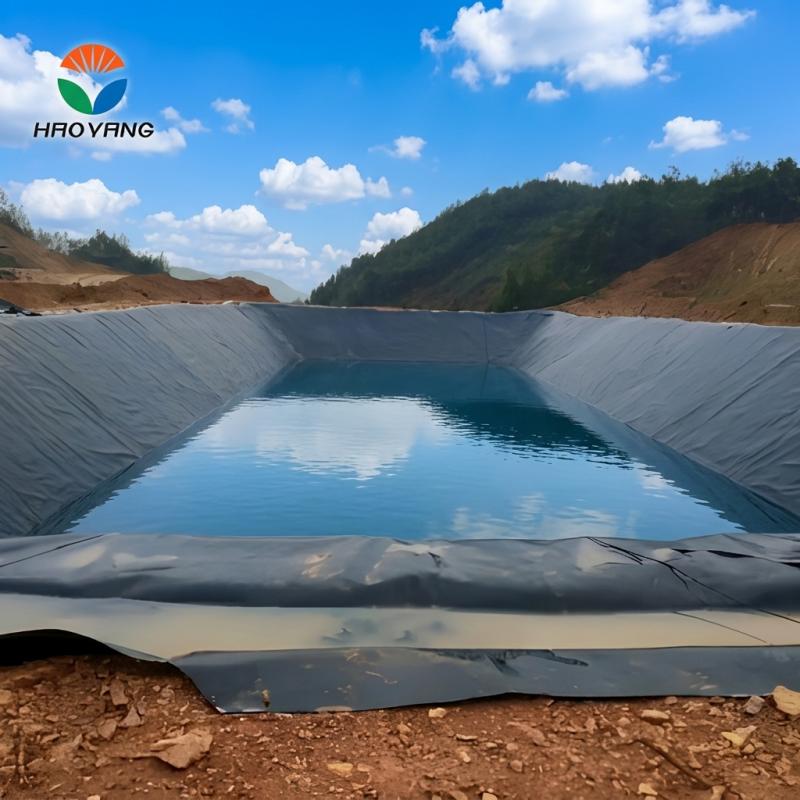
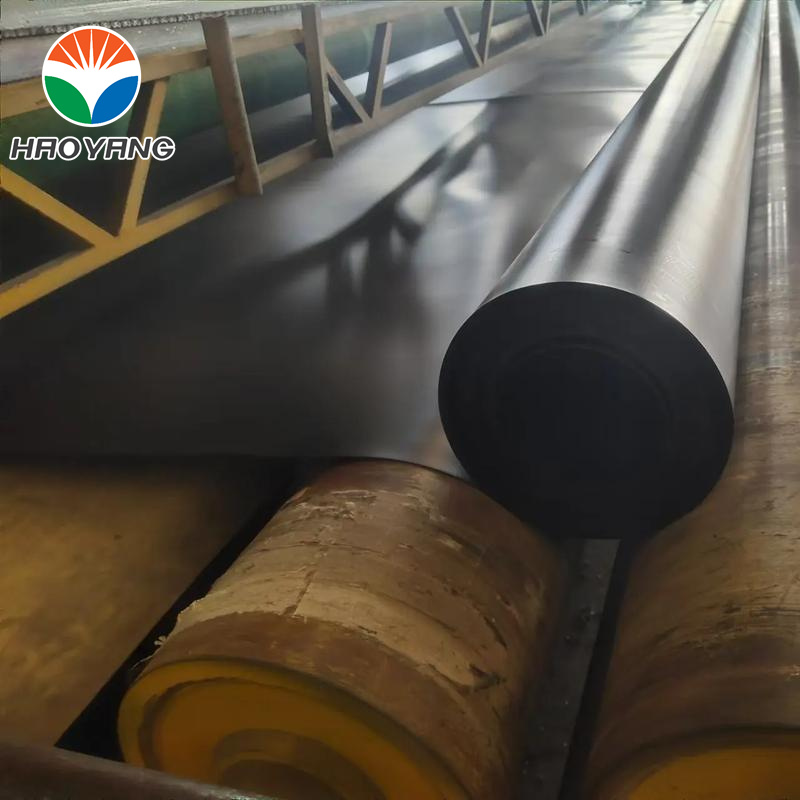
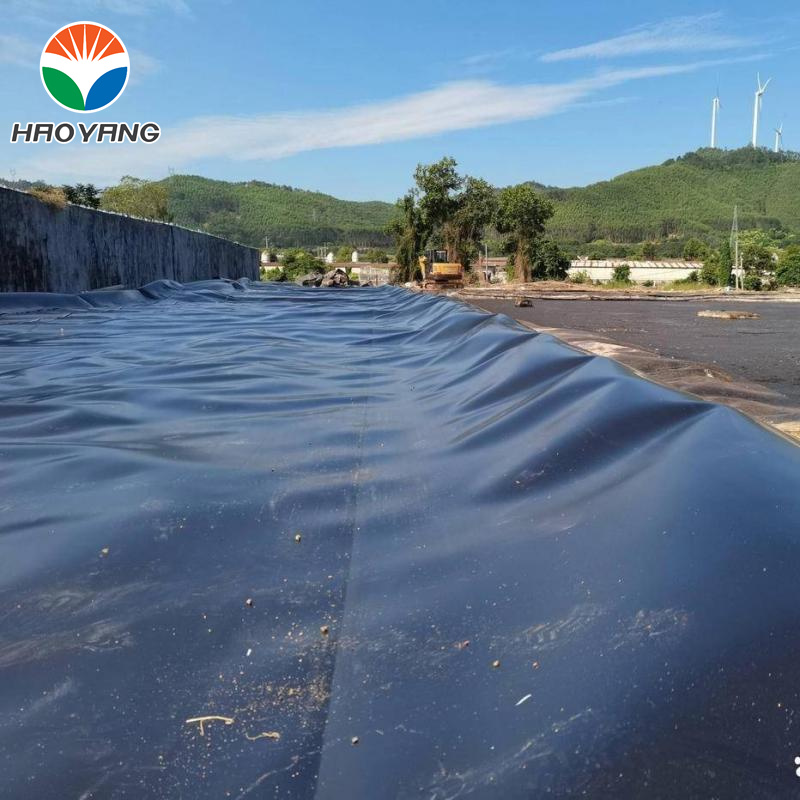
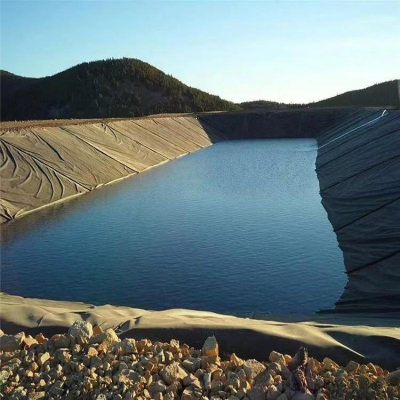
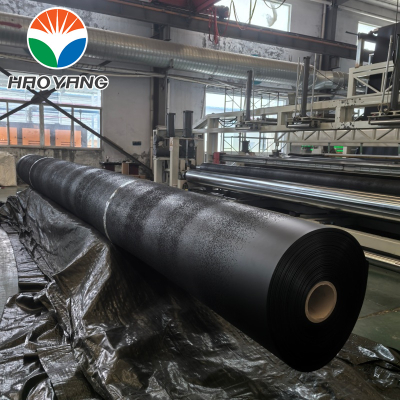
Geomembrane South Africa
1. Geomembrane South Africa solutions deliver excellent impermeability, significantly reducing water loss in reservoirs, dams, and irrigation systems.
2. Designed for harsh climates, HDPE geomembrane offers strong UV resistance and long-term durability under intense African sunlight.
3. High chemical resistance makes it ideal for mining, tailings, and industrial containment applications.
4. Flexible and high-strength material ensures reliable performance even with ground settlement and uneven subgrades.
I. Geomembrane South Africa: Market Overview and Demand Drivers
1. Growing Demand for Geomembrane in South Africa
Geomembrane South Africa is no longer a niche topic. It sits right at the intersection of mining expansion, water scarcity, and environmental compliance. In practical terms, this means more projects are specifying HDPE geomembrane as a standard liner rather than an optional upgrade. From gold and platinum operations to municipal reservoirs, demand continues to rise as project owners prioritize long-term containment performance.
2. Key Industries Driving Usage
(1) Mining industry including tailings storage and heap leach pads
(2) Water conservation projects such as reservoirs and irrigation dams
(3) Waste management including landfill lining systems
Table 1: Major Application Sectors in South Africa
Sector | Typical Use | Engineering Priority |
Mining | Tailings, heap leach | Environmental compliance |
Water | Reservoirs, canals | Seepage control |
Landfill | Waste containment | Pollution prevention |
As these sectors expand, buyers are not just asking for supply availability. They are asking a more important question: how to balance performance and cost in a demanding environment.
II. Performance Requirements for Geomembrane South Africa
Before diving into pricing, it helps to understand what kind of performance the South African environment actually demands. This context makes later cost discussions far more meaningful.
1. Harsh Environmental Conditions
(1) High UV exposure due to strong sunlight across most regions
(2) Significant temperature variation between day and night
These conditions accelerate aging in low-quality liners. That is why HDPE geomembrane with proper carbon black content is widely preferred.
2. Mechanical and Chemical Performance
Table 2: Typical HDPE Geomembrane Properties (GRI GM13)
Property | Standard Value |
Density | ≥ 0.940 g/cm3 |
Tensile strength (yield) | ≥ 15 kN/m |
Elongation at break | ≥ 700% |
Carbon black content | 2.0–3.0% |
3. Why These Properties Matter in Practice
(1) High elongation allows the liner to accommodate subgrade settlement
(2) UV resistance ensures long-term outdoor performance
(3) Chemical resistance supports mining and industrial containment
With performance requirements clearly defined, the next step is to connect these specifications to real-world pricing.
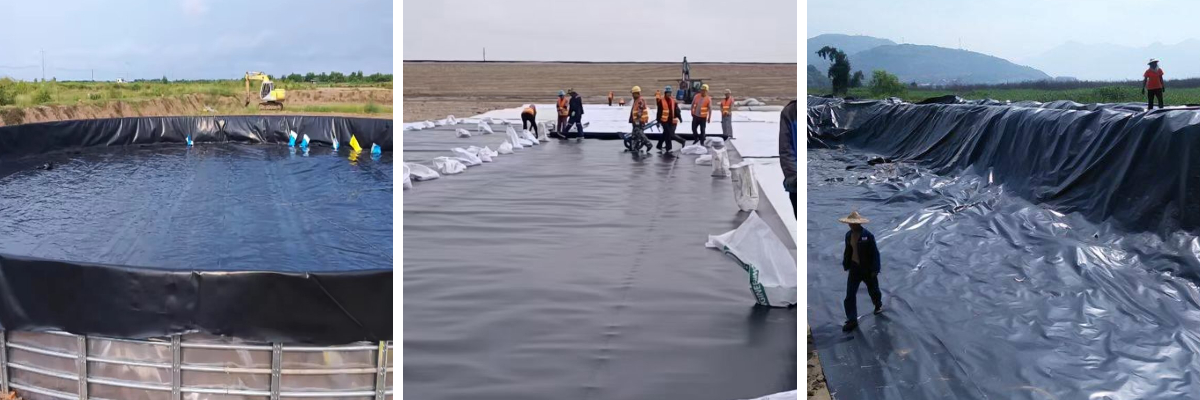
III. Geomembrane South Africa Price and Cost Factors
Understanding geomembrane South Africa pricing requires a broader view than just per square meter cost. Several upstream and project-level variables influence the final number.
1. Key Price Influencing Factors
(1) Thickness range typically from 0.5 mm to 2.5 mm
(2) Raw material cost linked to global HDPE resin markets
(3) Freight and import logistics into South Africa
2. Market Price Trends
HDPE geomembrane prices are closely tied to polyethylene resin markets, which in turn follow crude oil trends. Over the past decade, polyethylene prices have shown cyclical movement driven by oil price fluctuations, supply chain disruptions, and regional demand shifts.
Table 3: Main Cost Components
Cost Factor | Impact Level |
Raw material | High |
Freight | Medium to high |
Project volume | Reduces unit cost |
Specification | Higher spec increases cost |
3. Local Market Considerations
South Africa relies significantly on imported geomembrane products. As a result:
(1) Exchange rate fluctuations affect procurement cost
(2) Shipping timelines impact project schedules
(3) Bulk purchasing often improves pricing efficiency
With pricing context established, it becomes easier to evaluate how geomembrane performs across different applications.
IV. Application Scenarios and Buyer Pain Points
Now let’s shift from theory to practice. Different applications in South Africa bring very specific challenges, and geomembrane solutions need to address them directly.
1. Mining Projects
Pain Point: Leakage risk and strict environmental regulations
Solution: HDPE geomembrane provides high chemical resistance and low permeability, ensuring safe containment of tailings and leachate
2. Water Storage and Agriculture
Pain Point: Water loss due to seepage, especially in arid regions
Solution: Geomembrane reduces seepage dramatically compared to compacted soil, improving water use efficiency
3. Landfill and Waste Management
Pain Point: Groundwater contamination risk and regulatory pressure
Solution: Multi-layer liner systems using geomembrane ensure long-term environmental protection
Table 4: Recommended Thickness by Application
Application | Thickness |
Reservoir | 1.0–1.5 mm |
Mining | 1.5–2.5 mm |
Pond lining | 0.5–1.0 mm |
Understanding these use cases helps avoid common mistakes such as overdesign, which increases cost unnecessarily, or underdesign, which leads to failure.
V. Installation and Lifecycle Cost Considerations
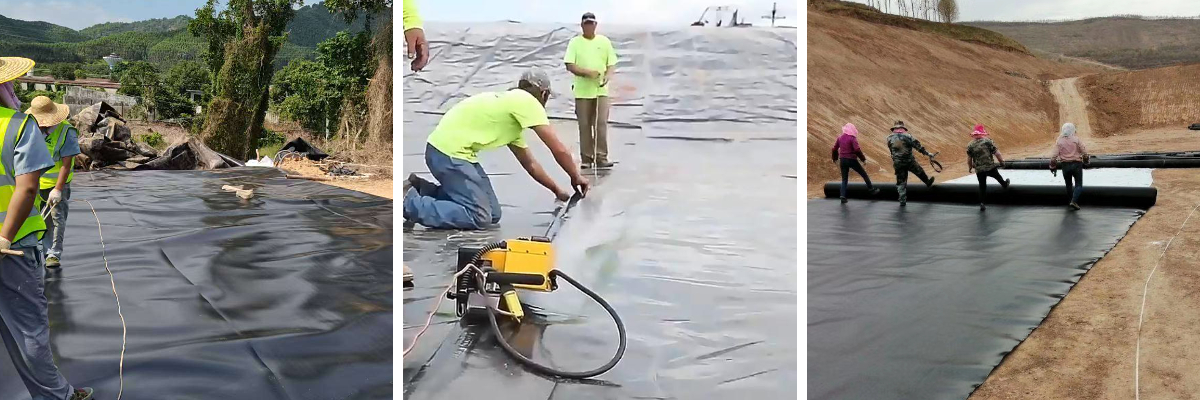
Even the best material can fail if installation is poorly executed. That is why installation plays a crucial role in total project cost.
1. Installation Efficiency
(1) Wider roll widths reduce seam quantity and labor time
(2) Proper subgrade preparation minimizes puncture risk
2. Welding and Quality Assurance
Reliable welding methods such as hot wedge welding are essential for seam integrity.
Table 5: Common Testing Methods
Test | Purpose |
Air pressure test | Detect seam leaks |
Vacuum test | Surface inspection |
Peel test | Verify weld strength |
3. Lifecycle Cost Perspective
(1) Reduced maintenance frequency lowers operational cost
(2) Lower leakage risk reduces environmental liability
(3) Longer service life improves overall return on investment
With installation accounted for, the final piece of the puzzle is supplier selection.
VI. Supplier Selection and Market Strategy in South Africa
Choosing the right supplier is often the difference between a smooth project and ongoing issues. This is especially true in markets like South Africa where logistics and consistency matter.
1. Key Supplier Evaluation Factors
(1) Consistent product quality aligned with international standards
(2) Reliable delivery timelines
(3) Technical support for design and installation
Table 6: Supplier Evaluation Criteria
Criteria | Importance |
Quality consistency | High |
Technical support | High |
Delivery reliability | High |
Price competitiveness | Medium |
2. Why Experience Matters
Suppliers with mining and infrastructure experience can anticipate project risks and provide practical recommendations, not just materials.
VII. Conclusion: Turning Geomembrane South Africa into Long-Term Value
At first glance, geomembrane South Africa may seem like a straightforward procurement decision. In reality, it is a strategic investment that affects performance, compliance, and long-term cost.
1. Focus on Total Value
Looking beyond initial price helps avoid costly repairs and failures in the future.
2. Match Specification to Application
Selecting the correct thickness and material grade ensures optimal performance without unnecessary expense.
3. Move Forward with Clarity
If you are sourcing geomembrane in South Africa, taking a structured approach to performance, pricing, and supplier selection will lead to better outcomes.
In the end, geomembrane South Africa is not just about lining a project. It is about building a system that works reliably for years, even under demanding conditions.