Español
 Francés
 Русский
 Indonesia
 العربية
 Português
 Deutsch
 ไทย
ไทย
 Pilipino


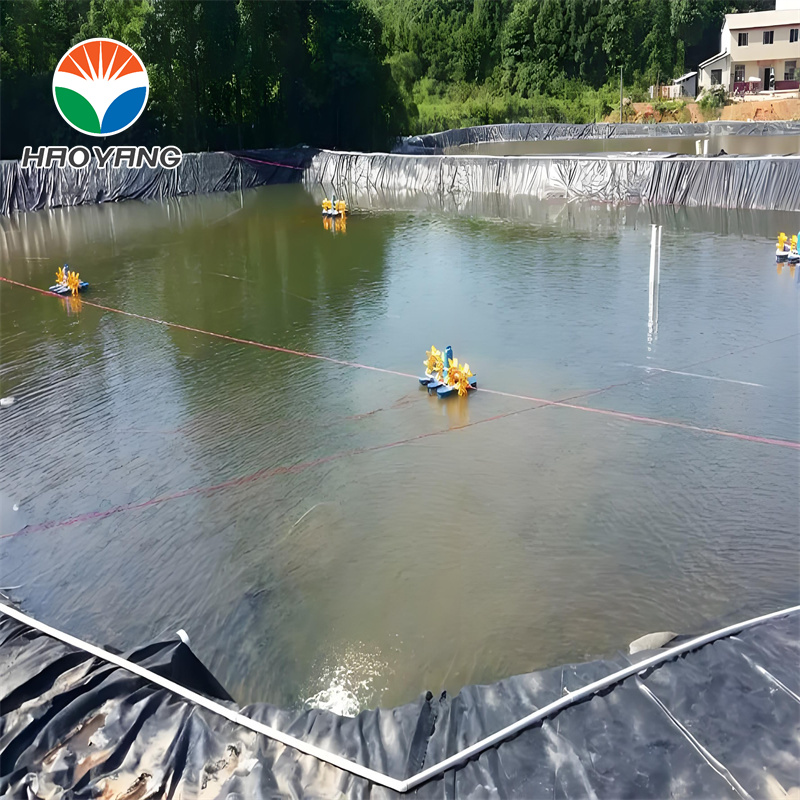
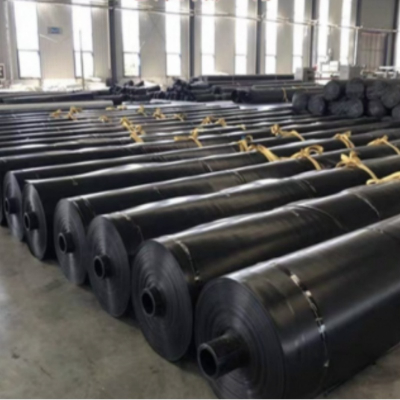
0.75mm Geomembrana in HDPE
1. Balanced Impermeability & Flexibility: 0.75mm HDPE geomembrana delivers 99.9% leak-proof performance for water storage and waste containment, while remaining flexible enough to conform to irregular site shapes.
2. Cost-Effective Durability: Resists UV degradation (retains 85% strength after 2,000 hrs ASTM G154 testing) and punctures (280+ N, ASTM D4833), offering long-term reliability without over-engineering for mid-sized projects.
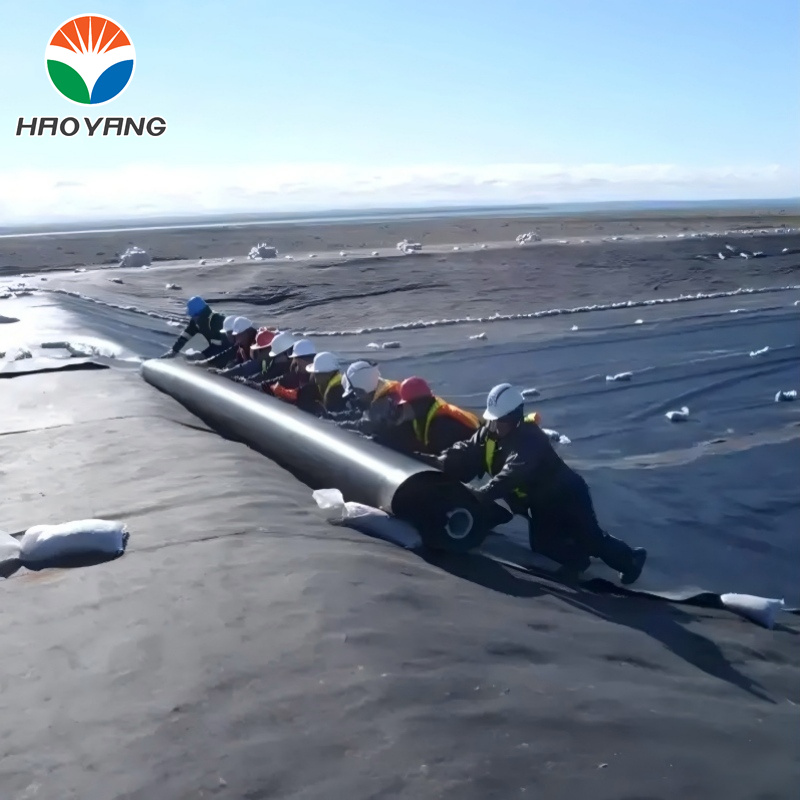
3. Simplified Installation: Lightweight 0.75mm gauge speeds up unrolling and welding—3-person crews install 900+㎡/day—ideal for agricultural ponds, small landfills, and irrigation canals.
4. Regulatory Compliance: Meets EPA Subtitle D and EN 13493 standards for environmental containment, ensuring compliance for residential, commercial, and light industrial applications.
0.75mm HDPE Geomembrana: Game-Changer for Agricultural Water Storage & Aquaculture Ponds
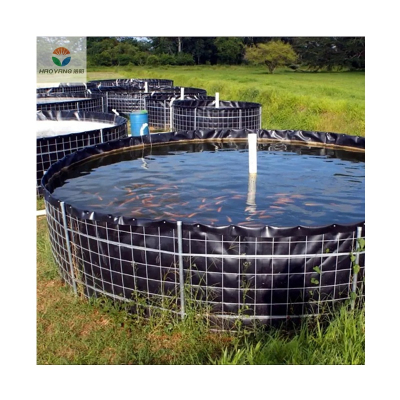
For farmers and aquaculture operators, water is everything—and wasting it due to leaky ponds or canals can sink your bottom line. That’s where 0.75mm HDPE Geomembrana comes in. This lightweight yet tough liner hits the sweet spot for agricultural and aquaculture needs: it locks in water without breaking the bank, fits almost any pond shape, and stands up to years of sun, water, and daily use. Whether you’re storing irrigation water, raising tilapia, or growing shrimp, this HDPE geomembrana is the reliable solution countless growers swear by. Let’s break down why it’s become a staple in farms and fish ponds worldwide.
I. Unbeatable Water Retention: Cut Waste, Boost Crop & Fish Yields
The biggest win with 0.75mm HDPE Geomembrana is its ability to stop water seepage—critical for regions with scarce water or high irrigation costs. Its dense HDPE structure creates a near-impenetrable barrier, keeping every drop where it belongs: in your pond or canal.
1. Seepage Reduction Performance vs. Unlined Ponds
Water Storage Type | Seepage Rate (Unlined) | Seepage Rate (With 0.75mm HDPE Geomembrana) | Water Savings |
Agricultural Irrigation Pond | 400–600 L/m²/year | <1 L/m²/year | 99.8%+ |
Tilapia Aquaculture Pond | 350–500 L/m²/year | <0.8 L/m²/year | 99.8%+ |
Small Irrigation Canal | 500–700 L/m²/year | <1.2 L/m²/year | 99.7%+ |
(1) Real-World Impact on Farms
I work with a family farm in California’s Central Valley that switched to 0.75mm HDPE geomembrana for their 2-acre irrigation pond. Before, they were losing 30,000+ liters of water weekly to seepage, forcing them to pump extra groundwater (and pay higher electricity bills). After installation, seepage dropped to almost zero. They now save 1.5 million liters of water annually—and their tomato yields jumped 18% because they could maintain consistent soil moisture.
(2) Aquaculture Benefits
For fish farmers, water retention isn’t just about saving water—it’s about maintaining water quality. Leaky ponds dilute nutrients and oxygen levels, stressing fish. A shrimp farmer in Florida told me that after lining his ponds with 0.75mm HDPE geomembrana, his water ammonia levels stayed stable, and his shrimp survival rate went from 65% to 82%. Plus, he cut water replacement by 90%, saving hours of work and reducing pump costs.
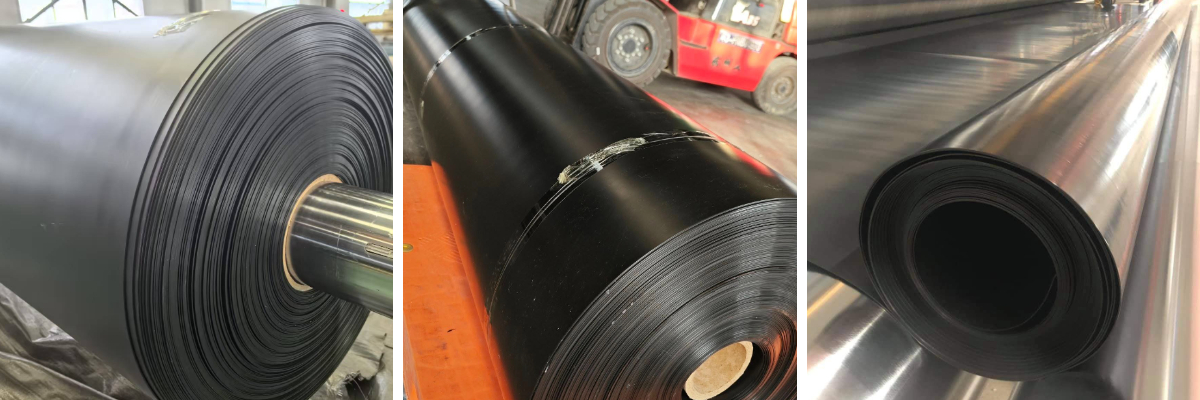
II. Perfect for Agricultural & Aquaculture Shapes: Flexible & Easy to Install
Farms and fish ponds rarely come in perfect rectangles—they follow land contours, have odd angles, or narrow into canals. 0.75mm HDPE Geomembrana’s flexibility makes it easy to fit these irregular shapes, while its lightweight design keeps installation fast and affordable.
1. Installation Efficiency & Adaptability
Feature | 0.75mm HDPE Geomembrana | Thicker HDPE (2.0mm+) | Clay Liners |
Weight (kg/㎡) | 6.75 | 18+ | 200+ |
Installation Speed (㎡/day/3-person crew) | 900–1100 | 400–600 | 200–300 |
Ability to Fit Irregular Shapes | Excellent (350% elongation, ASTM D882) | Fair (250% elongation) | Poor (brittle, cracks on uneven ground) |
(1) No Fancy Tools Needed
You don’t need a huge crew or specialized equipment to install 0.75mm HDPE geomembrana. Most farm teams can do it themselves with basic tools: a heat sealer for welding seams, a roller to smooth out wrinkles, and stakes to secure the edges. A 1-acre fish pond can be lined in 1–2 days, which means minimal downtime for your operation.
(2) Works for Small & Large Projects
Whether you have a small 0.5-acre pond for backyard tilapia or a 10-acre irrigation reservoir, 0.75mm HDPE geomembrana scales to your needs. It’s available in rolls up to 12 meters wide, so you can cover large areas with fewer seams (fewer seams = fewer leak risks). For narrow irrigation canals, it’s easy to cut and shape without wasting material.
III. Durable Enough for Farm Life: UV & Chemical Resistant
Farms and aquaculture ponds are tough on liners—constant sun exposure, fertilizer runoff, and fish waste can break down inferior materials. 0.75mm HDPE Geomembrana is engineered to handle these stressors, lasting 15+ years with minimal maintenance.
1. Durability Testing Results
Test Standard | Test Condition | 0.75mm HDPE Performance |
ASTM G154 | 2,000 hours UV exposure (equivalent to 10 years outdoor use) | Retains 85% tensile strength |
ASTM D4833 | Puncture resistance (simulating rocks, tools, fish netting) | Withstands 280+ N (enough to stop a 4cm rock impact) |
ASTM D5322 | Exposure to agricultural chemicals (fertilizers, pesticides) & fish waste (ammonia, nitrates) | No degradation after 5,000 hours |
(1) UV Stability for Open Ponds
Unlike cheap PVC liners that turn brittle and crack after 2–3 years in the sun, 0.75mm HDPE geomembrana has built-in UV stabilizers. A farmer in Texas has had his liner in place for 12 years, and it still looks almost new—even with 10+ hours of daily sunlight in summer.
(2) Safe for Fish & Crops
This geomembrana is non-toxic and meets FDA 21 CFR 177.1520 standards, so it’s safe for fish, shrimp, and crops. You don’t have to worry about chemicals leaching into the water or soil, which is critical for organic farms or aquaculture operations selling to premium markets.
IV. Cost-Effective & Compliant: Smart Investment for Farmers
Farmers need solutions that work without breaking the bank—and 0.75mm HDPE Geomembrana delivers. It’s more affordable than thicker HDPE liners but lasts longer than PVC or clay, making it a long-term investment that pays off in water savings and reduced maintenance.
1. Regulatory Compliance for Agricultural Operations
Many regions have strict regulations on water conservation and runoff to protect groundwater. 0.75mm HDPE Geomembrana meets EPA Subtitle D (U.S.) and EN 13493 (EU) standards for environmental containment, so you can avoid fines and stay compliant. It’s also approved for use in organic farming by the USDA, a big plus for growers targeting organic markets.
2. Long-Term Cost Savings
Let’s do the math: A 1-acre irrigation pond lined with 0.75mm HDPE geomembrana costs less than $2,000 (material only). The water savings alone—about 1.2 million liters per year—cuts irrigation costs by $500–$800 annually. Add in the 15+ year lifespan, and you’re looking at a return on investment in 3–4 years. Compare that to PVC liners that need replacement every 5 years, and it’s a no-brainer.
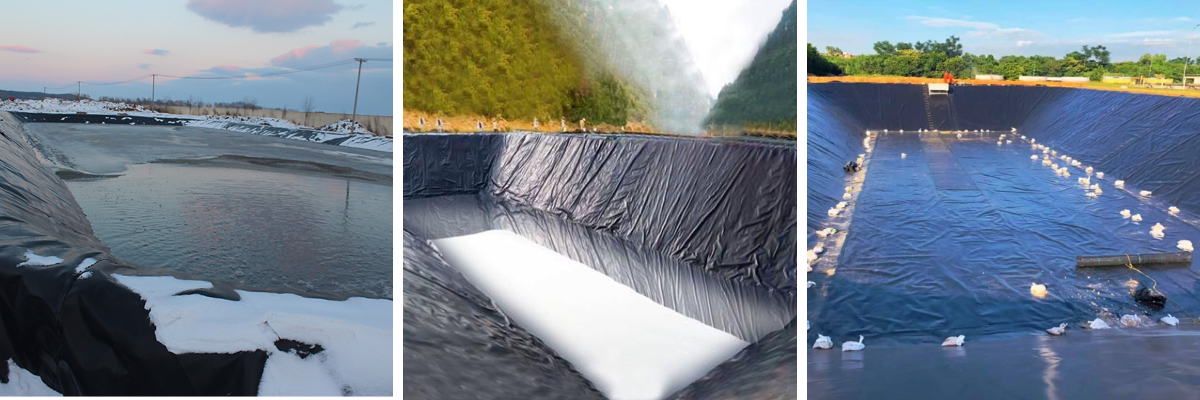
V. Farmer & Aquaculture Operator Reviews
Don’t just take our word for it—here’s what real growers are saying:
“We lined our 3-acre catfish pond with 0.75mm HDPE geomembrana 8 years ago, and it’s still holding strong. Before, we were losing so much water we had to refill twice a month. Now, we refill once every 3 months. Our catfish grow faster because the water quality is consistent, and we’ve saved thousands on pump electricity.” — John M., Mississippi Catfish Farmer
“As an organic vegetable farmer, I needed a non-toxic liner for my irrigation reservoir. This HDPE geomembrana was easy to install with my small crew, and it’s saved me 40% on water costs. It’s also USDA-approved, which is crucial for my organic certification.” — Maria G., California Organic Grower
“I was skeptical about a thin 0.75mm liner, but it’s tougher than it looks. We’ve had rocks, tools, and even a tractor accidentally drive over the edge, and it hasn’t punctured. Perfect for our small-scale shrimp farm in Florida.” — Raj P., Florida Shrimp Farmer
VI. FAQ: Common Questions About 0.75mm HDPE Geomembrana for Agriculture & Aquaculture
1. Is 0.75mm thick enough for my farm pond?
Yes, for most agricultural and aquaculture applications (irrigation ponds, fish/shrimp ponds, small canals), 0.75mm is thick enough. It’s puncture-resistant to common farm debris, and the HDPE material is strong enough to handle water pressure up to 3 meters deep. For ponds deeper than 3 meters, we recommend a thicker liner (1.0mm+).
2. Can I install it myself, or do I need a professional?
Most farmers install it themselves with a small crew. You just need a heat sealer (available for rent or purchase) to weld the seams, a roller to smooth out the liner, and stakes to secure the edges. We provide detailed installation guides, and our team is available to answer questions.
3. Is it safe for fish and crops?
Absolutely. 0.75mm HDPE Geomembrana is non-toxic, BPA-free, and meets FDA 21 CFR 177.1520 standards for food contact. It won’t leach chemicals into the water or soil, making it safe for fish, shrimp, and all types of crops—including organic.
4. How long will it last?
With proper installation and maintenance, it will last 15+ years. It’s UV-stabilized to resist sun damage, and it’s resistant to agricultural chemicals and fish waste, so it won’t break down over time.
VII. Why Choose 0.75mm HDPE Geomembrana for Your Farm or Aquaculture Operation?
For farmers and fish farmers, 0.75mm HDPE Geomembrana checks all the boxes: it saves water, fits any pond shape, lasts for years, is safe for your crops/fish, and fits your budget. It’s not just a liner—it’s a tool that helps you grow more, save more, and reduce stress. Whether you’re just starting a small aquaculture project or upgrading your farm’s irrigation system, this geomembrana is the reliable choice.
Reach out to our team today to get a custom quote based on your pond size, or request a free sample to see the quality for yourself. We’ve helped thousands of farmers and aquaculture operators improve their water management—let’s help you too.