Español
 Francés
 Русский
 Indonesia
 العربية
 Português
 Deutsch
 ไทย
ไทย
 Pilipino


Geomembrane 1.0mm For Fish Shrimp
1.Superior Durability Under Stress
The geomembrane’s tensile breaking strength (≥27 N/mm) and elongation at break (≥700%) enable it to endure ground movement, heavy equipment, and aquatic animal activity without cracking. For example, in shrimp ponds, its puncture resistance (≥320 N) outperforms 0.75mm liners by 25%, reducing replacement costs.
2.Environmental and Operational Efficiency
By preventing water seepage, the liner reduces daily water consumption by 30–50% in fish farms. Its smooth surface also inhibits weed growth, cutting chemical treatment needs by 60% and improving water quality. A case study in Indonesia showed a 20% increase in shrimp survival rates after switching to HDPE liners due to reduced disease transmission from soil contaminants.
3.Cost-Effectiveness Over Time
While initial costs are 15–20% higher than clay liners, the 1.0mm HDPE geomembrane’s 25-year lifespan and minimal maintenance requirements result in a 40% lower total cost of ownership. Its lightweight design (1.0kg/m²) also reduces transportation and installation labor by 30% compared to concrete.
Geomembrane 1.0mm For Fish Shrimp
Abstract
High-density polyethylene (HDPE) geomembranes with a thickness of 1.0mm have emerged as a critical engineering material in modern aquaculture, particularly for fish and shrimp farming. This article explores the technical specifications, performance advantages, and application scenarios of 1.0mm HDPE geomembranes, supported by empirical data and industry standards. Two comparative tables analyze key physical properties and application-specific benefits, while three core advantages highlight its superiority over traditional materials.
Key Technical Specifications
The 1.0mm HDPE geomembrane is engineered to meet stringent aquaculture requirements, with performance metrics validated by international standards such as ASTM GRI-GM13 and ISO 9001. Table 1 summarizes its core physical properties:
Table 1: Physical Properties of 1.0mm HDPE Geomembrane
| Property | Specification Range | Test Method (ASTM) | Industry Impact |
Thickness | 1.00 ± 0.05 mm | D5199 | Ensures uniform waterproofing and durability |
Density | ≥0.940 g/cm³ | D1505 | High material density prevents chemical leaching |
Tensile Yield Strength | ≥15 N/mm (vertical/horizontal) | D6693 Type IV | Resists deformation under heavy loads or ground movement |
Tensile Breaking Strength | ≥27 N/mm (vertical/horizontal) | D6693 Type IV | Withstands punctures from sharp objects (e.g., shrimp claws) |
Elongation at Break | ≥700% | D6693 Type IV | Flexibility to adapt to terrain irregularities |
Tear Resistance (Right Angle) | ≥125 N | D1004 | Prevents tears during installation or pond maintenance |
Anti-Puncture Strength | ≥320 N | D4833 | Critical for shrimp ponds with abrasive substrates |
Oxidation Induction Time (OIT) | ≥100 min (normal pressure) | D3895 | UV resistance for long-term outdoor exposure |
Application Scenarios
The 1.0mm geomembrane is widely adopted across diverse aquaculture systems due to its versatility and reliability:
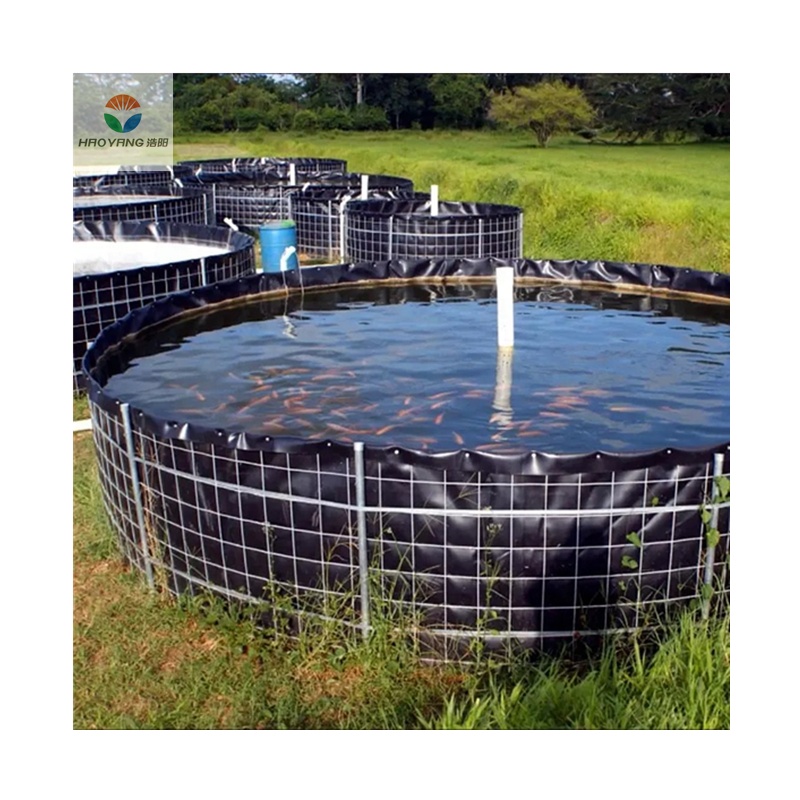
Freshwater and Marine Fish Ponds: Creates impermeable barriers to prevent water loss and soil contamination, reducing water refill frequency by up to 40% compared to unlined ponds.
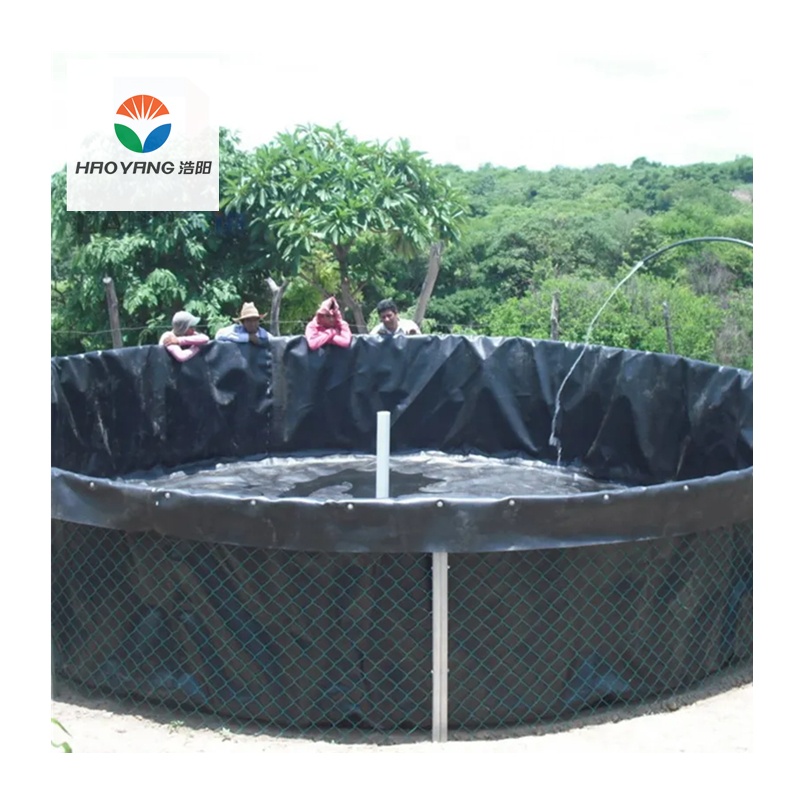
Shrimp and Lobster Farms: Its high puncture resistance (≥320 N) withstands aggressive digging behavior, while smooth surfaces minimize biofouling.
Recirculating Aquaculture Systems (RAS): Used in industrial tanks and filtration pools to isolate water from concrete structures, preventing chemical interactions that harm aquatic species.
Hatchery Facilities: Provides sterile environments for seedling cultivation, with UV-resistant properties ensuring material integrity over 20–30 years of sunlight exposure.
Comparative Advantages Over Traditional Materials
Table 2 contrasts 1.0mm HDPE geomembranes with conventional materials like concrete and clay liners:
Table 2: Performance Comparison with Traditional Materials
| Metric | 1.0mm HDPE Geomembrane | Concrete Liners | Clay Liners |
Installation Time | 1–3 days (for 1,000 m²) | 7–14 days | 10–20 days |
Water Retention Efficiency | 99.9% (zero seepage) | 90–95% (cracks over time) | 85–90% (erosion risk) |
Maintenance Costs | Low (no cracking repairs) | High (frequent patching) | Moderate (reapplication needed) |
Chemical Resistance | Excellent (pH 2–12) | Poor (alkaline leaching) | Moderate (acid sensitivity) |
Lifespan | 20–30 years (outdoor) | 10–15 years | 15–20 years |
Conclusion
The 1.0mm HDPE geomembrane represents a transformative solution for sustainable aquaculture, combining engineering precision with ecological benefits. Its robust physical properties, verified by ASTM and ISO standards, ensure reliability in harsh environments, while its long-term cost savings and operational efficiency make it indispensable for modern fish and shrimp farming. As global aquaculture production grows, adopting such advanced materials will be critical to meeting food security demands while minimizing environmental impact.