Español
 Francés
 Русский
 Indonesia
 العربية
 Português
 Deutsch
 ไทย
ไทย
 Pilipino


Global Infrastructure and Energy Transition Drive Rising Demand for Geosynthetics and Geomembrane Solutions
Amid ongoing shifts in global supply chains, accelerating energy transition projects, and increasing environmental regulation, the demand for high-performance geosynthetics continues to expand across international markets. In particular, geomembrane products have emerged as a critical material in infrastructure development, mining operations, water management systems, and environmental protection engineering.
As governments and industries respond to climate challenges, resource constraints, and stricter compliance requirements, the role of HDPE geomembrane, geotextiles, and composite geosynthetic systems is becoming more central to long-term project sustainability.
Against this backdrop, Haoyang Environmental Co., Ltd. is strengthening its global engagement by providing reliable geomembrane liner solutions for complex engineering applications worldwide.
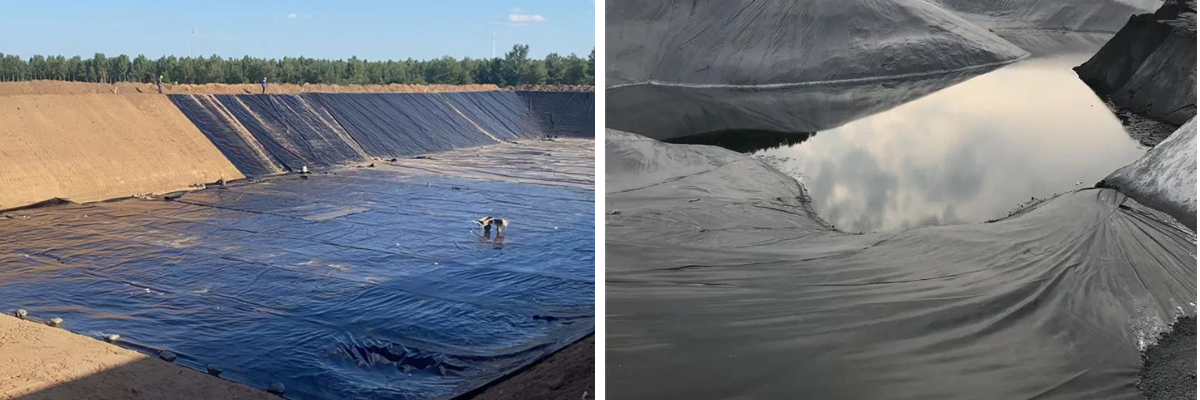
Energy Transition and Mining Expansion Fuel Geomembrane Demand
One of the most significant drivers of geomembrane demand is the rapid expansion of mining activities linked to the global energy transition. The growing need for critical minerals such as lithium, copper, nickel, and cobalt—essential for renewable energy systems and electric vehicles—has led to increased investment in mining infrastructure.
Modern mining operations require advanced containment systems to manage environmental risks associated with tailings storage, heap leaching, and wastewater treatment. In these applications, geomembrane liners for mining are indispensable for preventing seepage and protecting surrounding ecosystems.
High-performance HDPE geomembrane materials offer excellent chemical resistance, low permeability, and long service life, making them suitable for demanding mining environments. As environmental scrutiny intensifies, mining companies are prioritizing engineered containment systems that meet international standards and minimize long-term liability.
Water Scarcity and Agricultural Development Expand Application Scope
In parallel with mining growth, global concerns over water scarcity are driving increased investment in water infrastructure and agricultural efficiency. Regions across Africa, the Middle East, and parts of Asia are adopting geomembrane pond liners to improve water retention and reduce losses caused by seepage.
In agricultural engineering, geomembrane for irrigation reservoirs plays a key role in supporting food production and optimizing water use. Aquaculture operations also rely on geomembranes to maintain water quality and improve operational control.
These applications highlight the versatility of geomembrane systems beyond traditional industrial uses. As climate variability continues to affect water availability, demand for durable and cost-effective water containment geomembrane solutions is expected to grow steadily.
Landfill Modernization and Environmental Compliance
Another major trend influencing the geosynthetics industry is the modernization of waste management systems. With stricter environmental regulations being implemented worldwide, landfill operators are required to adopt more advanced containment technologies.
Landfill geomembrane liners form the core of modern waste containment systems, preventing leachate from contaminating soil and groundwater. In combination with geotextiles and drainage layers, geomembranes create multi-layer protection systems designed for long-term environmental safety.
As urbanization continues and waste volumes increase, municipalities are investing in improved landfill infrastructure. This trend is contributing to sustained demand for high-quality geomembrane products that meet regulatory standards and ensure reliable performance over decades.
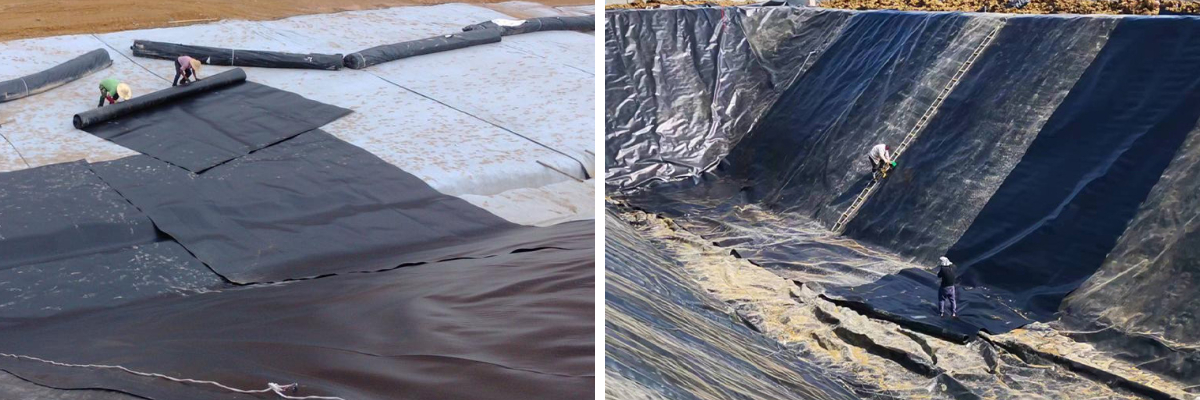
Manufacturing Advancements Improve Geomembrane Performance
Technological advancements in geomembrane manufacturing are also shaping the industry. Modern production lines enable the fabrication of wide-width geomembranes with improved thickness uniformity and mechanical properties.
Wide-width geomembrane sheets—often reaching up to 8 or 10 meters—reduce the number of seams required during installation. This not only improves construction efficiency but also lowers the risk of leakage, which is critical in applications such as landfill liners and mining containment systems.
Surface-textured geomembranes have also gained wider adoption due to their enhanced friction characteristics, which improve slope stability in challenging terrain conditions.
As a result, project owners are increasingly seeking suppliers capable of delivering both advanced products and consistent manufacturing quality.
Supply Chain Shifts and Global Sourcing Strategies
Recent geopolitical developments and supply chain disruptions have prompted many industries to reevaluate sourcing strategies. Engineering contractors and project developers are placing greater emphasis on supplier reliability, production capacity, and delivery stability.
In the geosynthetics sector, this shift has led to increased demand for established manufacturers with proven export experience and scalable production capabilities. Companies that can offer consistent product quality, timely delivery, and technical support are better positioned to build long-term partnerships in international markets.
Haoyang Environmental has responded to these market dynamics by strengthening its production systems and expanding its global service capabilities, supporting projects across multiple regions.
ESG Requirements and Sustainable Infrastructure
Environmental, Social, and Governance (ESG) considerations are now influencing project design and material selection across industries. Investors and regulatory bodies are placing greater emphasis on environmental protection, risk mitigation, and sustainable resource management.
Geomembranes contribute directly to ESG objectives by preventing contamination, reducing water loss, and supporting environmentally responsible engineering practices. Their durability and low maintenance requirements also make them a cost-effective solution for long-term infrastructure projects.
As ESG standards continue to evolve, the demand for certified geosynthetics manufacturers and high-performance geomembrane products is expected to increase further.
Haoyang’s Role in the Global Geosynthetics Market
With nearly two decades of experience in geosynthetics manufacturing, Haoyang Environmental continues to expand its presence in global markets by supplying HDPE geomembrane liners, geotextiles, and drainage systems for a wide range of applications.
The company’s products are used in mining, landfill engineering, water management, and agricultural projects across Asia, Africa, and Latin America. By combining manufacturing capability with application-focused technical support, Haoyang aims to meet the evolving needs of international clients.
Through ongoing investment in production technology and quality control systems, the company is working to enhance product performance and ensure consistent supply for large-scale engineering projects.
Outlook: Geomembrane as a Foundation for Future Infrastructure
Looking ahead, the importance of geomembrane materials in global infrastructure development is expected to grow further. Factors such as climate change, urbanization, resource scarcity, and environmental regulation will continue to drive demand for reliable containment solutions.
From mining and energy projects to agriculture and municipal engineering, geomembranes provide a practical and effective approach to managing environmental risks and improving project sustainability.
As industries adapt to changing global conditions, the role of geomembrane solutions will remain central to building resilient, efficient, and environmentally responsible infrastructure systems.