Español
 Francés
 Русский
 Indonesia
 العربية
 Português
 Deutsch
 ไทย
ไทย
 Pilipino


Climate-Resilient Infrastructure Drives Innovation in Geomembrane and Geosynthetics Applications
As climate variability intensifies and infrastructure projects are increasingly exposed to extreme environmental conditions, the role of high-performance geosynthetics—particularly geomembrane systems—is undergoing a significant transformation. Engineers and project owners are no longer selecting materials based solely on basic specifications; instead, long-term durability, environmental adaptability, and performance under stress have become central considerations.
Against this backdrop, the global demand for advanced geomembrane solutions is evolving rapidly, especially in applications where reliability under harsh conditions is critical.
Extreme Conditions Redefine Geomembrane Performance Requirements
Across many regions, infrastructure projects now face a combination of challenges: higher temperatures, stronger UV exposure, sudden rainfall events, and unstable soil conditions. These factors directly impact the performance of geomembrane liners, particularly in applications such as mining containment, landfill engineering, and water management systems.
Traditional material selection focused primarily on thickness and tensile strength. However, modern engineering standards require a more comprehensive evaluation, including:
· Long-term UV resistance
· Oxidative aging performance
· Environmental stress crack resistance
· Thermal expansion and contraction behavior
· Stability under cyclic loading conditions
In desert environments, geomembranes must withstand intense solar radiation and large temperature fluctuations between day and night. In tropical regions, high humidity and heavy rainfall can challenge drainage and containment systems. Meanwhile, cold climates introduce risks related to material brittleness and freeze-thaw cycles.
These evolving conditions are driving the development and adoption of more advanced HDPE geomembrane materials capable of maintaining performance over extended service lifetimes.
Infrastructure Investment and Urban Expansion Accelerate Market Growth
Global infrastructure investment continues to expand, particularly in emerging economies where urbanization and industrial development are accelerating. Large-scale projects—including transportation networks, municipal waste facilities, and water management systems—are increasingly incorporating geosynthetics as standard components.
In landfill engineering, geomembrane liner systems serve as the primary barrier against environmental contamination. As regulations become stricter, multi-layer containment systems combining geomembranes with geotextiles and drainage layers are becoming more common.
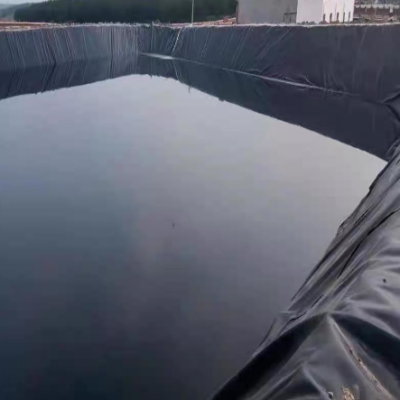
In water infrastructure, geomembrane for reservoirs and canals plays a key role in reducing seepage losses and improving efficiency. This is especially important in regions facing water scarcity, where resource conservation is a priority.
The increasing scale and complexity of these projects require materials that not only meet technical specifications but also perform reliably under diverse environmental conditions.
Mining Sector Continues to Drive High-Performance Demand
The mining industry remains one of the largest consumers of geomembrane products, particularly in applications such as tailings storage facilities, heap leach pads, and process water containment systems.
With the global demand for minerals such as copper, lithium, and nickel continuing to rise, mining projects are expanding into more remote and environmentally sensitive areas. This trend places greater emphasis on containment reliability and environmental protection.
In these applications, geomembrane for mining containment must demonstrate strong resistance to chemical exposure, mechanical stress, and environmental degradation. Failures in containment systems can lead to significant environmental and financial consequences, making material reliability a top priority.
As a result, project developers are increasingly seeking suppliers that can provide not only high-quality materials but also technical expertise and consistent product performance.
Advancements in Manufacturing and Material Engineering
Technological innovation in geomembrane production is playing a key role in meeting these evolving demands. Modern manufacturing processes enable improved control over material properties, resulting in better consistency and enhanced performance.
Wide-width geomembrane production has become an important trend, allowing for fewer seams during installation. Reduced seam frequency improves overall system integrity and lowers the risk of leakage, particularly in large-scale containment projects.
In addition, advancements in raw material formulation have improved resistance to environmental stress cracking and oxidation, extending the service life of geomembrane liners in demanding applications.
Textured geomembranes have also gained wider acceptance due to their improved interface friction, making them suitable for slope applications where stability is critical.
Sustainability and Lifecycle Performance Take Center Stage
Sustainability considerations are increasingly influencing material selection in infrastructure projects. Beyond initial performance, stakeholders are now evaluating the full lifecycle impact of construction materials.
Geomembranes contribute to sustainability in several ways:
· Preventing contamination of soil and groundwater
· Reducing water loss in storage and irrigation systems
· Supporting safe waste containment
· Extending the service life of infrastructure
As environmental standards continue to evolve, the demand for durable and low-maintenance geomembrane solutions is expected to increase further.
Haoyang’s Approach to Evolving Industry Needs
In response to these global trends, Haoyang Environmental Co., Ltd. continues to refine its approach to geosynthetics manufacturing and application support. By focusing on product consistency, performance reliability, and adaptability to diverse project conditions, the company aims to meet the changing requirements of international markets.
Haoyang’s HDPE geomembrane products are designed to support applications in mining, landfill engineering, water management, and agricultural infrastructure. Through ongoing investment in production technology and quality control systems, the company is working to ensure stable supply and consistent product performance.
In addition to manufacturing capabilities, Haoyang emphasizes practical solutions tailored to real project environments, recognizing that installation conditions and environmental factors play a critical role in overall system performance.
Looking Ahead: Geomembrane as a Core Material for Resilient Infrastructure
As infrastructure projects become more complex and environmental challenges continue to evolve, the role of geomembranes will remain central to engineering design. From climate resilience to environmental protection, these materials provide a reliable and cost-effective solution for containment and resource management.
The future of the geosynthetics industry will be shaped not only by material innovation but also by the ability to adapt to real-world conditions and project requirements.
With a focus on performance, durability, and global application experience, Haoyang Environmental is positioned to support the next generation of infrastructure projects with reliable geomembrane and geosynthetics solutions.